
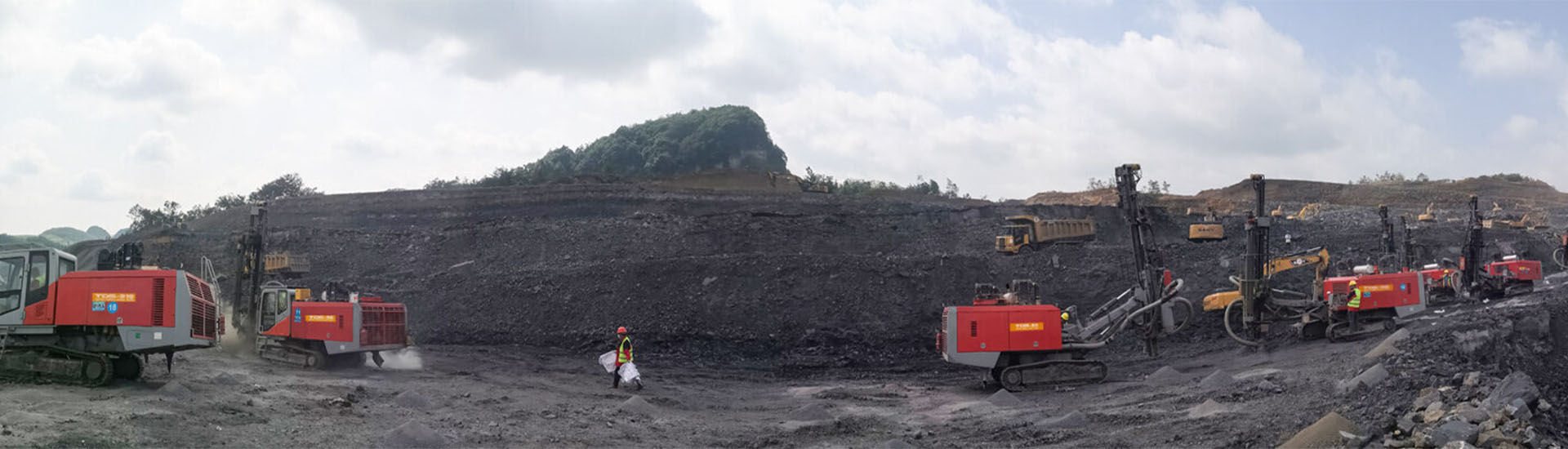
A rig can have enough capacity for the hole and still be the wrong purchase for the site. In remote exploration, the journey from the delivery point to the drill pad can rule out an otherwise suitable machine. Portable equipment allows separate loads; crawler travel is useful where a continuous, suitable route exists.
The choice between surface core drilling rigs therefore starts with a route survey. The number of holes matters too. Equipment that is manageable for one isolated pad may involve too much assembly work for a program with frequent moves.
Start with the Access Route
There is room for misunderstanding in the word “portable.” One offer may describe a machine split into modules; another may cover a skid requiring a crane. The useful distinction is how the equipment will be carried over the route you actually have.
Check the Heaviest Module
Suppose the access plan depends on lifting individual sections over an obstruction. In that situation, a low total rig weight does not answer the important question: can the available lifting equipment handle the largest section?
A modular portable core drilling rig proposal needs a load list, including dimensions and weights for the power unit and mast sections. Also ask what remains connected during a move. A light module offers little advantage if moving it requires repeated hose disconnection and lengthy reassembly.
Measure the Route for a Crawler Rig
A road width measurement can look adequate until the route reaches a tight bend. Overhanging obstacles or a soft section of ground may also prevent the proposed machine from passing. Photographs help a supplier review the approach, but measurements of the narrow sections are needed as well.
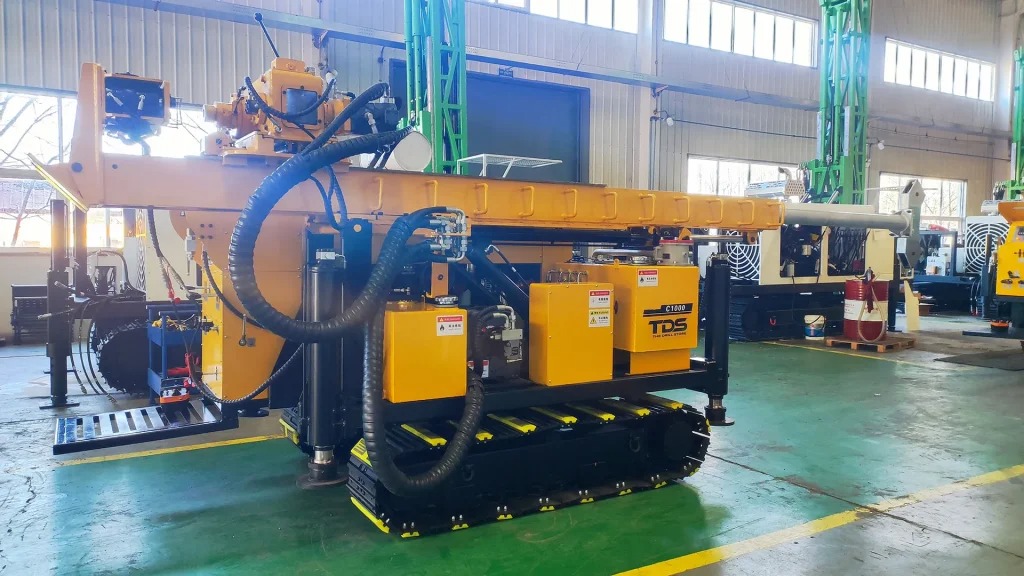
إن C1000 surface coring drilling rig has crawler travel and a removable mast, according to TDS’s product description. Its compact body is intended for restricted roads. An allowable slope or bridge load cannot be inferred from that description, however; those need a separate check against the proposed machine.
Compare Setup and Moves Between Holes
Once access is feasible, count the moves in the actual program. One isolated hole reached by separate loads presents a different transport problem from several pads connected by a usable track.
Allow for Assembly at Each Pad
Arrival at the pad is only part of a modular rig’s move. Assembly and reconnection come next, followed by the checks specified for the machine. This is where the supplier’s procedure becomes useful for planning crew numbers and arranging lifting equipment.
A crawler mounted core drilling rig can reduce dismantling where it can travel between pads in its approved transport configuration. It still needs a suitable working surface, leveling and mast preparation. Self-propelled travel does not remove those setup tasks.
Compare the Same Work on Both Options
Use the table below to structure supplier discussions. It compares transport arrangements, not the drilling performance of particular models.
| Selection factor | Modular portable rig | Crawler mounted rig |
|---|---|---|
| Access to the first pad | Separate loads where the lifting plan permits | Continuous route suitable for the complete traveling machine |
| Key transport data | Heaviest module, dimensions and lifting points | Travel dimensions, mass, clearance and operating limits |
| Pad preparation | Space for unloading, assembly and support equipment | Bearing surface, leveling area and room for positioning |
| Repeated moves | Check dismantling and reconnection work | Check route continuity and required transport preparation |
| Main cost question | How many handling and assembly operations? | How much route preparation and carrier transport? |
“Portable” and “crawler mounted” are not always exclusive categories. A modular drilling system may be fitted to a carrier. Ask what the quoted configuration actually includes before comparing prices.
Check Drilling Capacity Before Choosing the Carrier
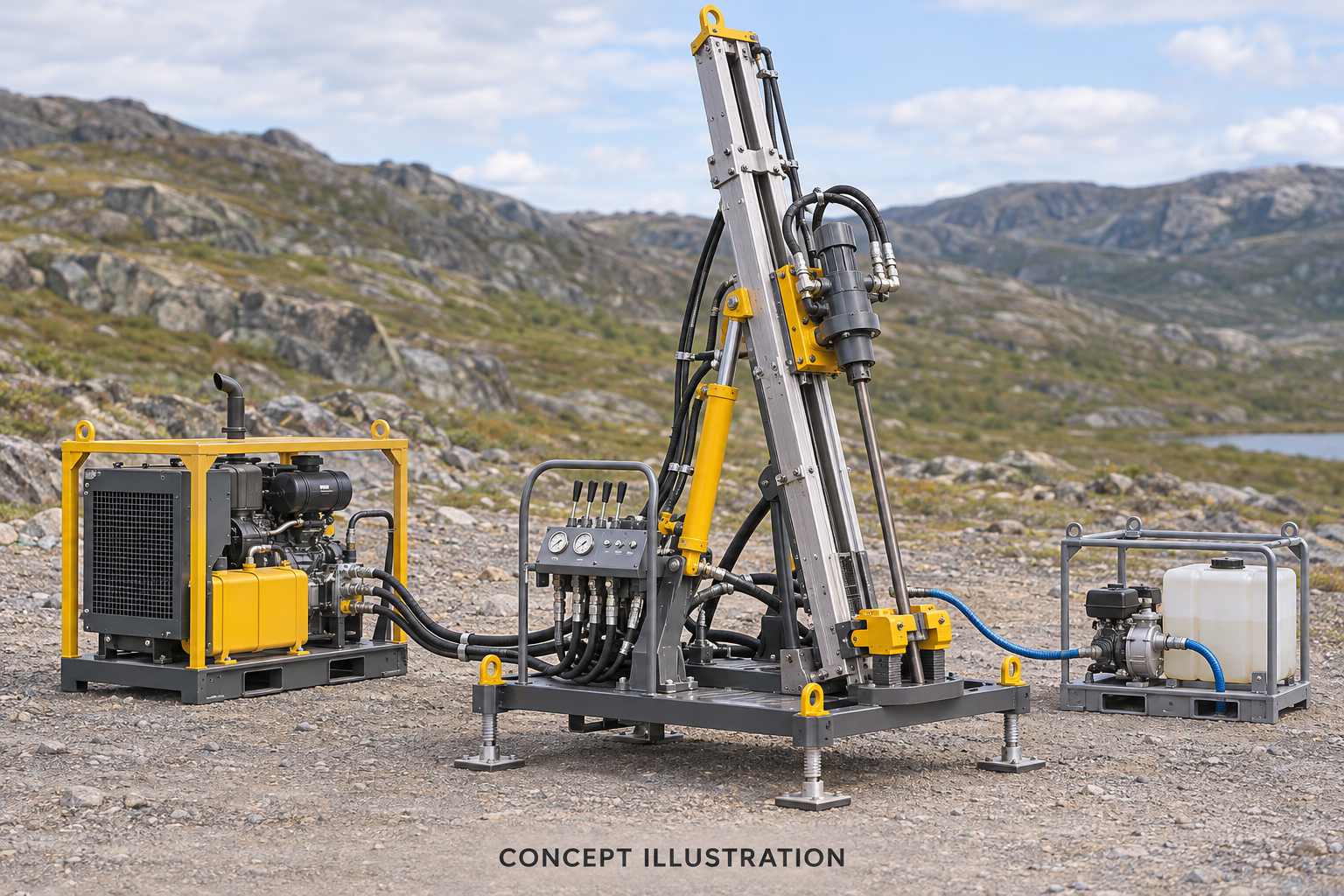
The route assessment narrows the transport options. A shortlisted model, such as the C1300 surface coring drilling rig, must still suit the planned holes. A carrier solves the travel problem; it does not establish what the drilling system can do.
Keep the Drilling Requirement Consistent
Quotations are easier to compare when both suppliers receive the same depth range, hole inclination, core size and ground description. Rotation, feed, pullback and hydraulic power can then be considered against one drilling program.
There is a further detail worth resolving before purchase: which configuration does the capacity figure describe? A headline rating may refer to different installed equipment from the quotation. If a power unit has been changed to suit transport, the supplier should confirm the capacity of that version.
Include the Equipment Around the Rig
There is more to transport than the core drilling equipment alone. Even with crawler access, fuel and water supply equipment may have to arrive separately. Pad drawings should leave room for that equipment, spares and any lifting work.
For the cost comparison, follow the journey from freight delivery through unloading and assembly to the next hole. Route preparation belongs in that calculation. A lower purchase price can leave more work for the contractor, particularly where site transport is excluded from the offer.
Review TDS Crawler Rig Options
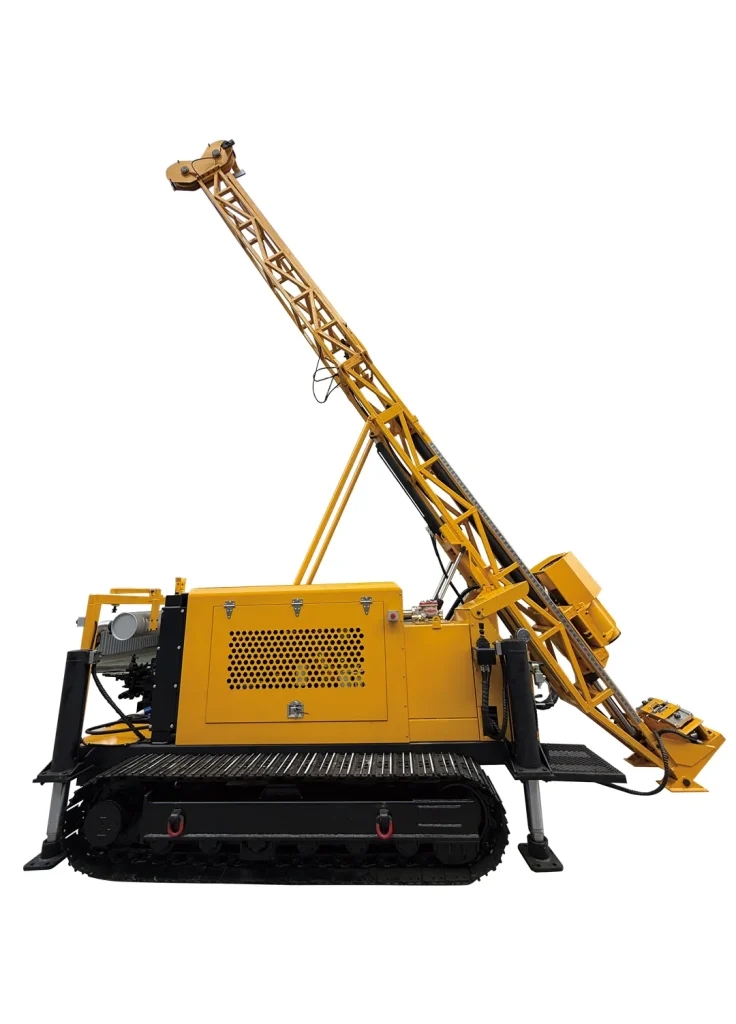
TDS lists C1000 and C1300 surface coring drilling rigs with crawler travel, hydraulic functions, an aluminum alloy mast and a side-sliding chuck power head. The power head clears the hole for core extraction. These are relevant features to review when assessing access, mast handling and work around the collar.
For a model discussion, send TDS the route survey alongside the drilling requirements and request transport drawings and a configuration-specific quotation. TDS also lists remote technical assistance and commissioning among its service and support options. Availability at the project location belongs in the quotation. Any request for transport in separate modules needs its own confirmed proposal.
Conclusion
For an isolated pad without a suitable crawler approach, separate loads may be necessary. With connected pads, the balance may favor a crawler and fewer dismantling operations. The purchase decision should account for the whole program, including the drilling capacity of the offered machine and the work needed to move it.
FAQs
Can a crawler core drilling rig travel on any mountain track?
No. Width is only one part of access. A weak crossing or a bend the machine cannot negotiate can interrupt an otherwise usable route, so the supplier needs more than a description such as ‘mountain track.’
Does a removable mast make a rig man-portable?
Removing the mast does not tell you how the base or power unit will be carried. Portability depends on the remaining loads as well; their individual weights belong in the transport proposal.
What should a remote exploration quotation include?
The quotation needs a defined supply boundary. For example, if a crane is required for unloading, who arranges it? Transport data, assembly instructions and the auxiliary equipment list help expose these responsibilities before an order is placed.
 Arabic
 English
 Portuguese
 Spanish
 Russian
 Italian
 German
 French
 Dutch