
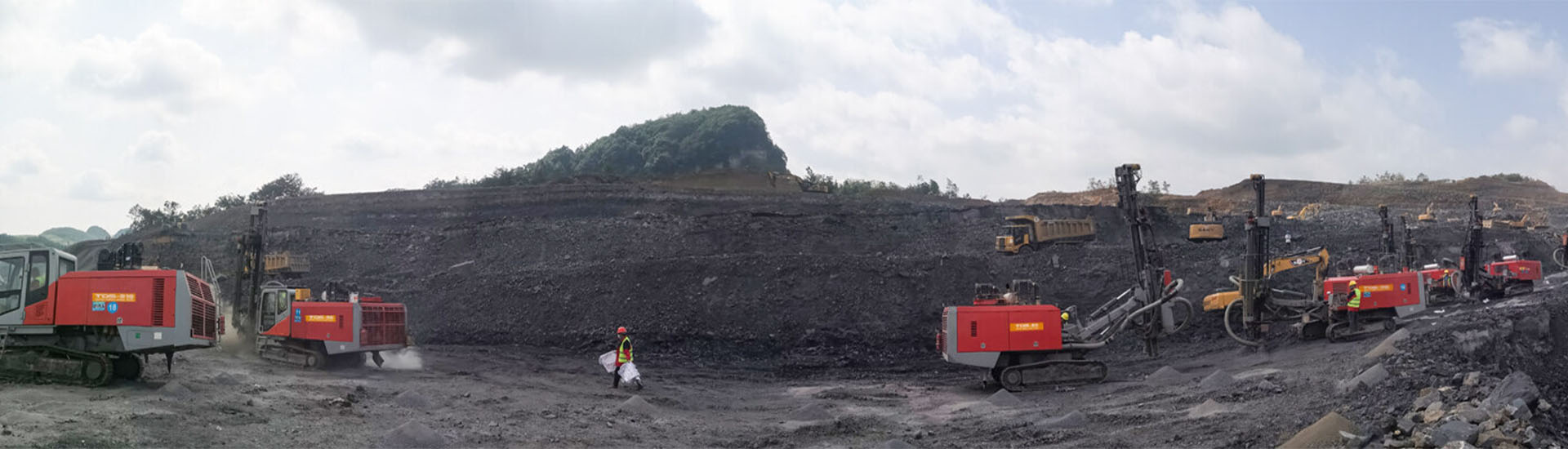

A quarry DTH drilling package should be chosen from the blast plan backward: establish the working hole diameter and depth, understand how the rock behaves, and then match the rig, hammer, air supply, and bench workflow to those conditions. Problems often appear when equipment is bought in the opposite order, with a rig selected first and the compressor or tooling fitted around it later. For quarry contractors and technical purchasers, the useful comparison is therefore not which machine carries the largest specification, but which combination can repeat the required holes without creating excessive tool wear, poor hole cleaning, difficult repositioning, or unnecessary operating cost.
What Should Be Fixed in the Blast Plan Before Comparing DTH Drilling Rigs?
The first equipment discussion should happen only after the main drilling requirements are reasonably clear. Hole diameter has an immediate effect on hammer size, bit selection, drill pipe, air consumption, and the mechanical demand placed on the drilling system, while depth influences rod handling and the amount of time spent completing each hole.
Use the Normal Hole as the Main Reference
Procurement teams sometimes build a specification around the most demanding hole expected during the year. That approach can leave a quarry paying for capacity used only occasionally. It is usually more useful to define the normal production hole first, then check whether the proposed equipment still has enough margin for less common conditions.
A quarry drilling brief might contain the following information:
| Information from the Site | What It Changes in Equipment Selection |
| Normal and maximum hole diameter | Hammer, bit, drill pipe, and air demand |
| Bench height and hole depth | Feed arrangement and rod-handling workload |
| Typical rock condition | Hammer, bit face, and operating parameters |
| Hole pattern and spacing | Repositioning frequency and crawler use |
| Required drilling output | Suitable balance between capacity and cycle time |
The point of this table is not to create a universal specification. It gives the supplier enough context to explain why a particular configuration is suitable. When reviewing a full hydraulic DTH drilling rig range, compare the proposed working range with the quarry’s normal holes rather than treating the largest published diameter as the purchasing target.
How Should Rock Conditions Change the Hammer, Bit, and Operating Setup?
Rock rarely behaves as neatly as a catalog description suggests. A bench described simply as “hard granite” may contain abrasive zones, fractured bands, weathered sections, or changes in jointing that affect penetration and bit condition during the same shift. For that reason, geology should influence more than the initial rig shortlist.
Hard, competent rock generally needs reliable impact transfer and appropriate bit loading, while abrasive formations may make consumable life a larger cost issue than nominal penetration speed. In broken ground, the concern can shift toward hole stability, cuttings removal, and keeping the drill string moving without excessive vibration or deviation.
Past Drilling Records Are More Useful Than a General Rock Label
Where the quarry already has production history, technical buyers can ask operations staff for a few practical records: common hole depths, typical drilling time, bit consumption, recurring hammer problems, and formations where penetration drops sharply. Even approximate field records can reveal whether the new equipment should prioritize additional impact capability, better hole cleaning, easier adjustment, or simply more consistent control.
The purchasing implication is straightforward. A larger rig does not automatically correct poor bit life or unstable drilling. Tool design, feed, rotation, lubrication, air delivery, and operator settings still need to suit the formation, so equipment quotations should describe the proposed drilling combination rather than only the machine.
How Much Compressor Capacity Is Actually Needed for Quarry DTH Drilling?
The compressor is easy to underestimate because it is physically separate from the rig, yet it directly affects what happens at the bottom of the hole. The hammer needs adequate pressure to work correctly, while sufficient airflow is required to carry broken material through the annular space and back to the surface.
Selecting the compressor only from a pressure figure can create a misleading comparison. A unit may provide enough pressure for the hammer but still leave poor cuttings removal if available airflow is low for the selected bit diameter. On the other hand, buying considerably more compressor capacity than the hole requires adds fuel consumption, transport weight, and capital expense without guaranteeing better drilling.
The sensible starting point is the hammer manufacturer’s pressure and air-consumption requirement. From there, the calculation should allow for hole diameter, depth, elevation, air-line arrangement, leakage, and site conditions. The DTH air compressor selection guide provides additional background on how pressure, airflow, and drilling depth interact.
When quotations arrive, the compressor and hammer should therefore be reviewed as a pair. If one supplier proposes a different hammer class or bit diameter, its compressor requirement may also change, which makes direct comparison by compressor model or rated power alone unreliable.

Which Rig Features Have the Greatest Effect on Daily Quarry Production?
Penetration rate attracts attention because it is easy to measure, but a quarry rig does not spend the entire shift drilling. It also travels between holes, aligns with the pattern, levels on the bench, adds or removes drill pipe, receives routine inspection, and occasionally waits for cleaning or maintenance. A machine that drills quickly but loses time during every repositioning cycle may not deliver the expected shift output.
For closely spaced blast holes, crawler movement and setup become part of the production calculation. On uneven benches, leveling and machine stability matter for both hole quality and operator control. Maintenance access also deserves attention because dust, vibration, hoses, filters, lubrication points, and wear components are part of normal quarry service rather than exceptional repairs.
Compare a Drilling Cycle, Not an Isolated Specification
A technical evaluation can follow one complete hole from setup through completion. How easily does the operator position the machine? How is feed controlled as the formation changes? What happens when another drill pipe is required? Is dust collected without making service access difficult? How long does the machine need before moving to the next collar?
Questions like these often expose differences that are hidden when two quotations are compared only by torque, feed force, or maximum depth. They also give operators a useful role in procurement, since the person working with the machine every day will notice handling issues that may not appear on a specification sheet.
What Should Be Settled With the Supplier Before a Quarry Rig Is Ordered?
By the time a preferred rig has been shortlisted, most technical risks should already have been removed from the quotation. The final review is less about finding another impressive specification and more about confirming that every component expected at the quarry is actually included and compatible.
The purchase file should identify the drilling range being quoted, hammer and bit interface, drill pipe, compressor requirement, hoses and connections, lubrication arrangement, dust-control equipment, and the spare items expected for commissioning. Transport dimensions and service requirements also matter if the machine must move between sites or work far from a parts warehouse.
Before releasing the order, it is useful to compare the planned work with the supplier’s quarry application information, particularly when the project involves changing bench conditions or several types of surface drilling work. Any remaining assumptions should be written into the quotation rather than left for the site team to resolve after delivery.
The best quotation is not necessarily the one with the longest equipment list. It is the one where the relationship between the hole, rock, rig, hammer, air supply, and operating environment is clear enough that both sides understand what the package is expected to do.

Need a Quarry Drilling Setup That Works as One System?
For quarry teams sourcing the rig, air supply, and rock tools as one coordinated package, Beijing The Drill Store Machinery Equipment Co., Ltd. (TDS) supplies drilling equipment, compressors, hammers, bits, and related components for surface drilling work. Its full hydraulic DTH drilling rig range includes crawler-mounted configurations for different quarry conditions, while a published model in the range covers 90–130 mm holes and combines hydraulic feed, adjustable rotation, crawler travel, leveling, and dry dust collection. Those features are useful only when they fit the actual job, so the final configuration still needs to be checked against the quarry’s drilling diameter, rock behavior, compressor requirement, bench access, transport conditions, and maintenance routine.
Conclusion
A quarry DTH rig is easier to select when the discussion begins with the holes that must be drilled rather than the machine that might drill them. Hole diameter establishes the basic tooling and air requirement, geology influences hammer and bit behavior, while bench layout and maintenance conditions affect how productive the machine remains between holes. Before approving a purchase, the technical team should confirm the rig, compressor, drilling tools, interfaces, and site requirements as one package and resolve any assumptions while the equipment is still at the quotation stage.
FAQs
1. Should Hole Diameter Be Decided Before Selecting a DTH Drilling Rig?
Yes. Hole diameter affects hammer size, bit selection, drill pipe, airflow, and the working range expected from the rig. Starting with the blast-hole requirement makes it easier to compare configurations that are genuinely suitable for the quarry.
2. Is Higher Drilling Speed Always Better in Hard Quarry Rock?
Not by itself. A high penetration rate may offer little benefit if it is accompanied by excessive bit wear, unstable holes, or frequent tool changes. Production should be judged together with consumable life, hole quality, and operating consistency.
3. Can a Larger Compressor Improve DTH Drilling Automatically?
No. The compressor needs to match the hammer and provide enough airflow for hole cleaning, but unnecessary capacity adds fuel use and cost. Pressure, airflow, diameter, depth, and site elevation should be considered together.
4. Why Should Crawler Movement Be Considered During Rig Selection?
A quarry rig may reposition dozens of times across a blast pattern. Travel, leveling, and setup time therefore influence total shift productivity even though they do not change the penetration rate measured while the bit is drilling.
5. What Should a Quarry Buyer Include in a Request for Quotation?
A useful RFQ includes normal hole diameter and depth, rock conditions, bench layout, expected drilling output, available compressor information, tooling preferences, transport restrictions, and maintenance conditions so suppliers can propose comparable drilling packages.
 Portuguese
  English
  Spanish
  Russian
  Italian
  German
  French
  Dutch
Dutch  Arabic