
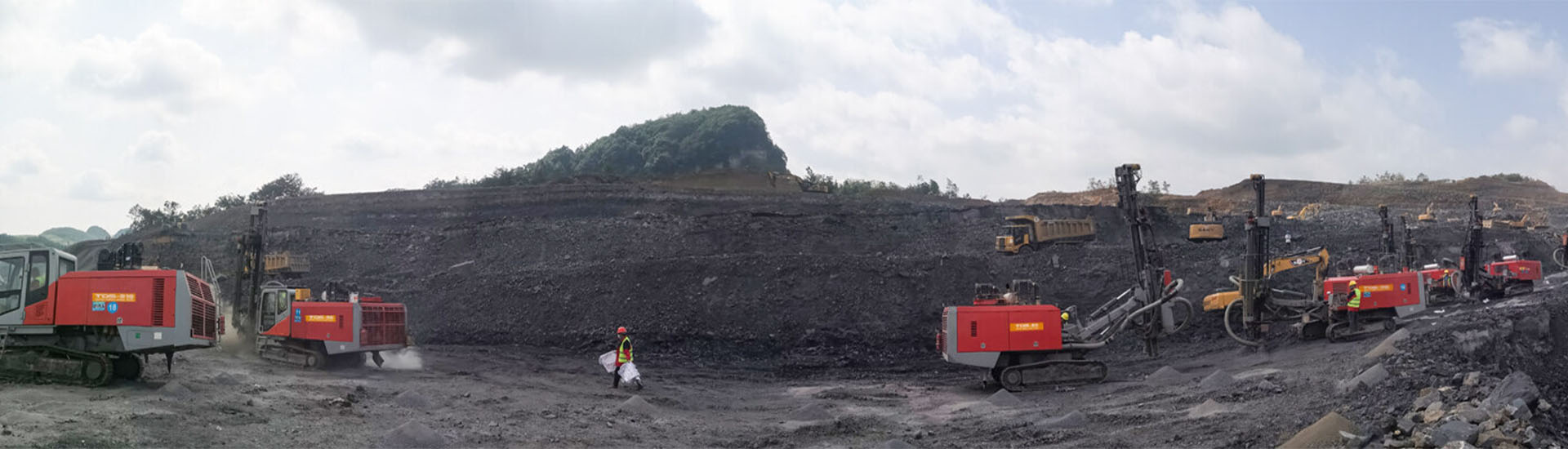
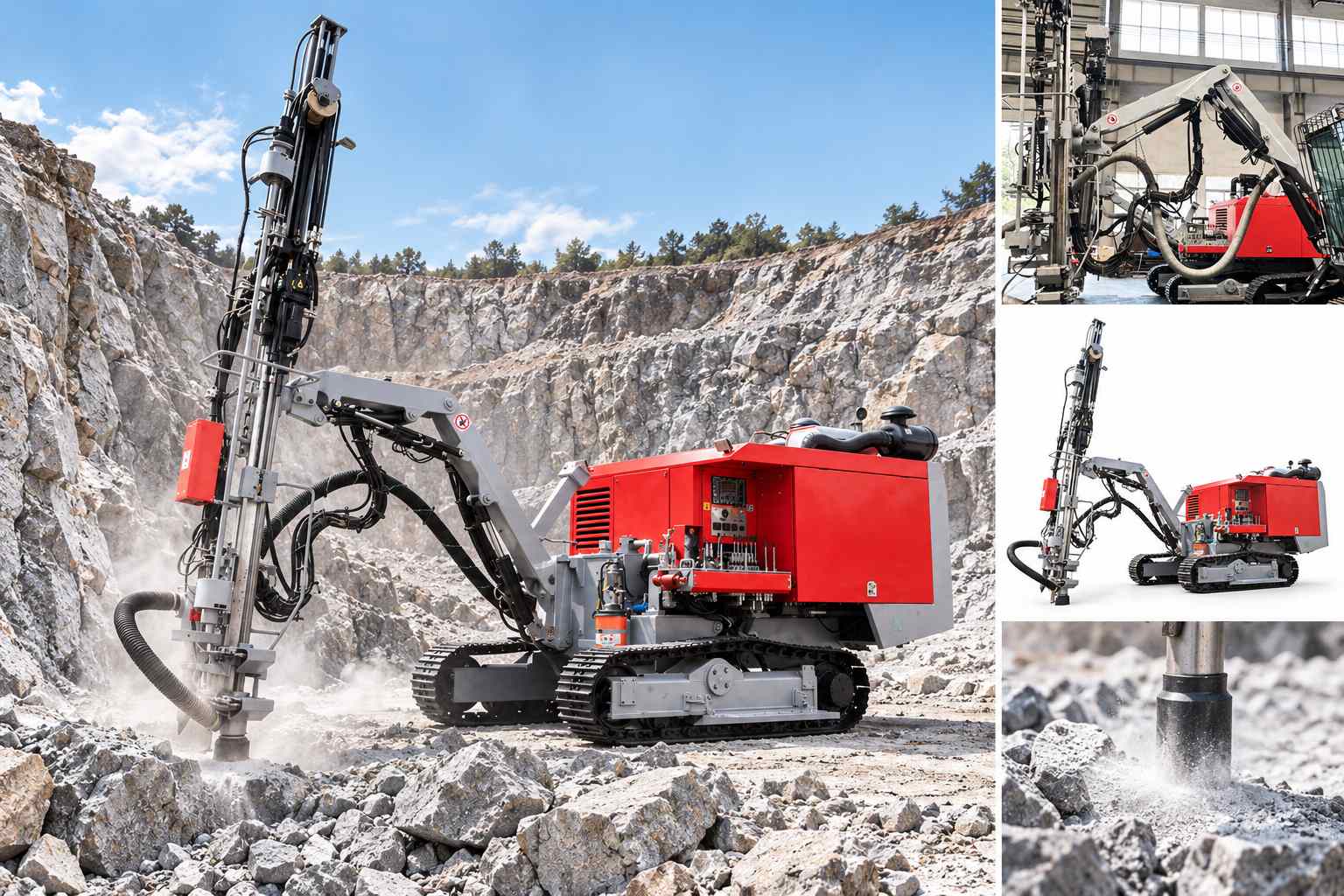
A top hammer drilling rig should be selected from the hole pattern and worksite outward, not from engine power or the largest published hole range. Quarry benches, road cuts, slope treatment, and earthwork excavation may use the same drilling principle but create different demands for hole diameter, rod handling, boom movement, crawler stability, and dust control. Rock hardness and fracture condition also change how impact energy travels through the drill string. For contractors and technical buyers, the useful comparison is the complete drilling system rather than the rig alone.
What Hole Size and Site Conditions Should Be Defined Before Choosing a Top Hammer Rig?
Start with the holes the rig will drill most often. A machine chosen around an occasional maximum hole can add weight and operating cost without improving the normal cycle. Define the usual hole diameter, depth, drilling angle, bench or slope geometry, and available setup space first.
Turn the Hole Pattern Into Equipment Requirements
Hole diameter determines the basic bit and rod system, while depth affects rod changes and energy transfer. Site geometry changes the value of crawler mobility, boom reach, feed-beam movement, and machine width.
| Project Condition | Selection Focus |
|---|---|
| Smaller repetitive holes | Fast positioning, suitable rod system |
| Larger hole diameter | Rock-drill capacity, rod and bit size |
| Inclined quarry face | Boom articulation and stability |
| Narrow construction access | Machine width and maneuverability |
| High drilling frequency | Rod handling and dust collection |
This is why a full hydraulic top hammer drilling rig should be compared against the normal job rather than a single maximum specification.
How Do Rock Conditions and Hole Depth Change the Rig and Tooling Choice?
Top hammer performance depends on transferring impact energy through the shank adapter, rods, couplings, and bit. Hard rock may need stable impact and rotation control, while fractured ground can make alignment, flushing, and hole deviation harder to manage. Abrasive rock can move tool life higher on the cost list than nominal penetration speed.
Depth Changes More Than Rod Count
As the hole becomes deeper, each connection adds another interface through which impact energy must travel. Worn couplings, poor rod alignment, or mismatched threads can increase losses before the energy reaches the bit.
For short quarry or construction holes, a smaller hole-range rig may fit well when mobility and cycle time dominate. Where the planned diameter moves higher and rod handling becomes more demanding, the rig needs a drilling system sized for that working range. The useful decision combines hole diameter, rock condition, rod system, and expected depth.
Which Rig Functions Matter Most on Quarry Benches and Construction Slopes?
Penetration rate describes only the time when the bit is cutting rock. A rig also travels to the next collar, levels, aligns the boom, handles rods, clears dust, and prepares for another hole. Those steps can change the real production difference between two machines.
Application Scenario: Uneven Quarry and Mountain Worksites
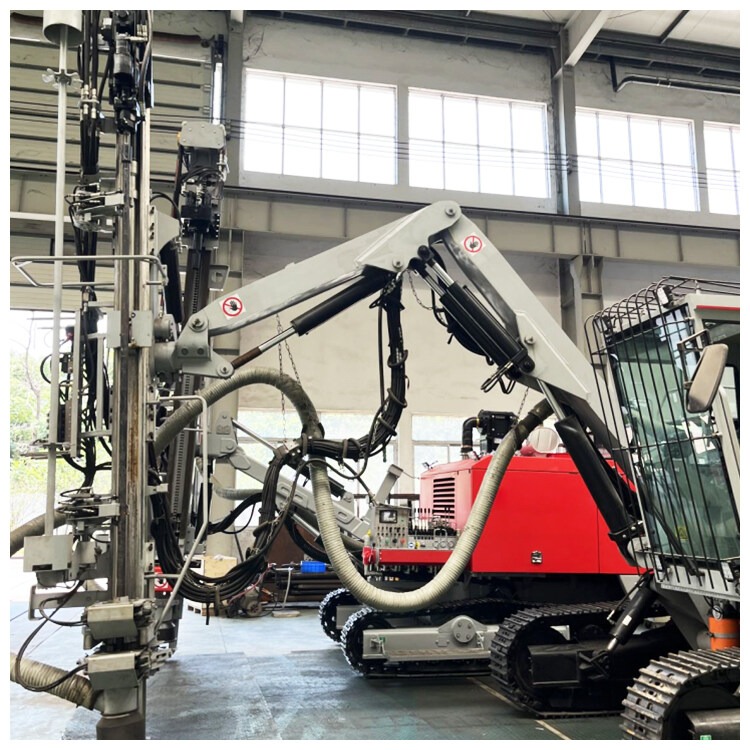
Uneven quarry floors, inclined faces, loose gravel, wet ground, and mountain access increase the value of crawler traction and controlled positioning. Stability and alignment matter because the rig may work close to a slope while repeatedly moving between holes. Hydraulic boom adjustment becomes more useful when the pattern includes angled or face holes rather than only vertical holes. These conditions are also specifically discussed in TDS’s published application content for crawler top hammer rigs.
For road cuts, slope treatment, and earthwork excavation, compact maneuverability can matter more than a larger machine’s headline specifications. A useful field comparison follows one complete cycle: move, align, drill, change rods if needed, clear the hole, and reposition.
How Should the Rock Drill, Rods, Bits, and Flushing System Be Matched?
The rig and tooling form one energy-transfer system. The rock drill creates the impact, the shank adapter passes it into the drill string, rods and couplings carry it forward, and the bit delivers it to the rock. A mismatch at any interface can appear as vibration, thread wear, weak penetration, or repeated stoppages.
Keep the Interfaces Consistent
The shank adapter must match the rock drill, rod threads must match the couplings, and the bit connection must match the final rod. The selected rock drilling tools also need to suit the hole diameter and formation. Uneven button wear, damaged threads, or repeated coupling problems can indicate issues with feed, rotation, alignment, or component matching.
Flushing belongs in the same review. Cuttings left at the hole bottom interfere with efficient drilling, while dust collection matters during dry surface work. Instead of ordering the machine first and tooling later, review the rock drill, shank adapter, rods, couplings, bits, flushing components, and initial wear items together.
What Should Be Confirmed Before the Rig Configuration Is Approved?
By the final review, the normal hole range, rock conditions, site geometry, and tooling system should already be defined. The remaining task is checking that the quoted machine can complete the typical drilling cycle without gaps between the rig and supplied accessories.
Check One Representative Drilling Cycle
Confirm the normal hole diameter and depth, drilling angle, crawler and boom arrangement, rod-changing method, dust or flushing system, transport dimensions, and maintenance access. The tooling list should identify the shank adapter, rods, couplings, bits, lubrication requirements, and the kits and consumables expected during initial operation.
Then walk through one representative hole: move into position, align, drill, add or remove rods, clear the hole, and relocate. If one step depends on an unspecified component or manual workaround, that gap is better resolved before delivery. Two rigs with similar hole ranges may differ substantially in positioning, rod handling, dust control, and service access.
Need a Top Hammer Rig for Quarry or Construction Work?
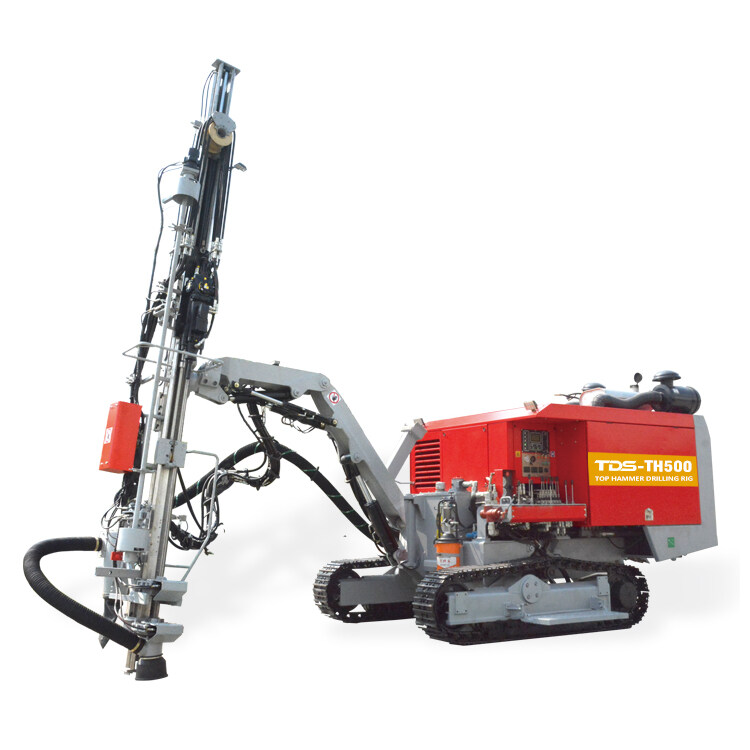
When hole size, rock conditions, and site layout are defined, model selection becomes much more concrete. Beijing The Drill Store Machinery Equipment Co., Ltd. (TDS) lists the Plataforma de perforación de martillo superior hidráulica TDS-TH500 for 60–90 mm holes and the Plataforma de perforación de martillo superior hidráulica TDS-TH700 for 76–115 mm holes. The TH500 page describes crawler travel, hydraulic swing adjustment, two-stage dry dust collection, and mechanized rod changing. The TH700 page lists vertical and horizontal facade drilling from 0.3–7.6 m and a 17 m² planar drilling coverage area. These published figures are reference points; the final choice still depends on the actual hole range, rock, access, and drilling pattern.
Conclusion
A top hammer rig is easier to select when the project is reduced to hole diameter, depth, rock behavior, drilling angle, access, and the way the rig moves and handles rods during a shift. Those conditions determine the value of crawler mobility, boom movement, rod handling, dust control, and the selected drill string. Comparing the complete drilling cycle and tooling interfaces gives a clearer basis than choosing by maximum hole size or machine power alone.
FAQs
1. How Does Hole Diameter Affect Top Hammer Rig Selection?
Hole diameter changes the bit, rod system, rock-drill demand, and flushing requirement. Use the normal production hole as the main reference rather than an occasional maximum size.
2. What Changes When Top Hammer Holes Become Deeper?
More rod connections increase the importance of coupling condition, alignment, and energy transfer. Rod handling also becomes a larger part of the drilling cycle.
3. What Matters Most on Uneven Quarry Benches?
Crawler traction, machine stability, boom positioning, and clear access around the pattern matter most because the rig must reposition repeatedly while holding the planned drilling angle.
4. Why Should the Rig and Drilling Tools Be Selected Together?
The rock drill, shank adapter, rods, couplings, and bit form one impact-transfer path. A mismatch can reduce penetration or accelerate wear even when the rig has enough capacity.
5. When Is a Larger Top Hammer Rig Worth Considering?
A larger working range is useful when the project consistently requires larger holes, heavier tooling, or functions the smaller machine cannot provide. Extra capacity has less value when normal production stays within a smaller rig’s range.
 Spanish
  English
  Portuguese
  Russian
  Italian
  German
  French
  Dutch
Dutch  Arabic