
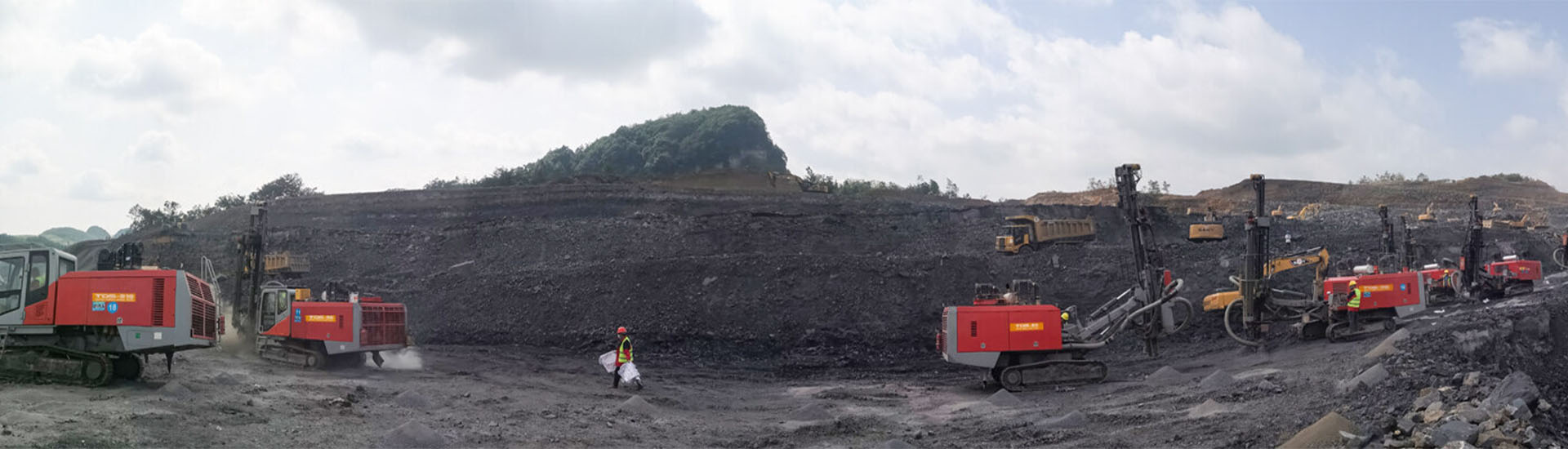
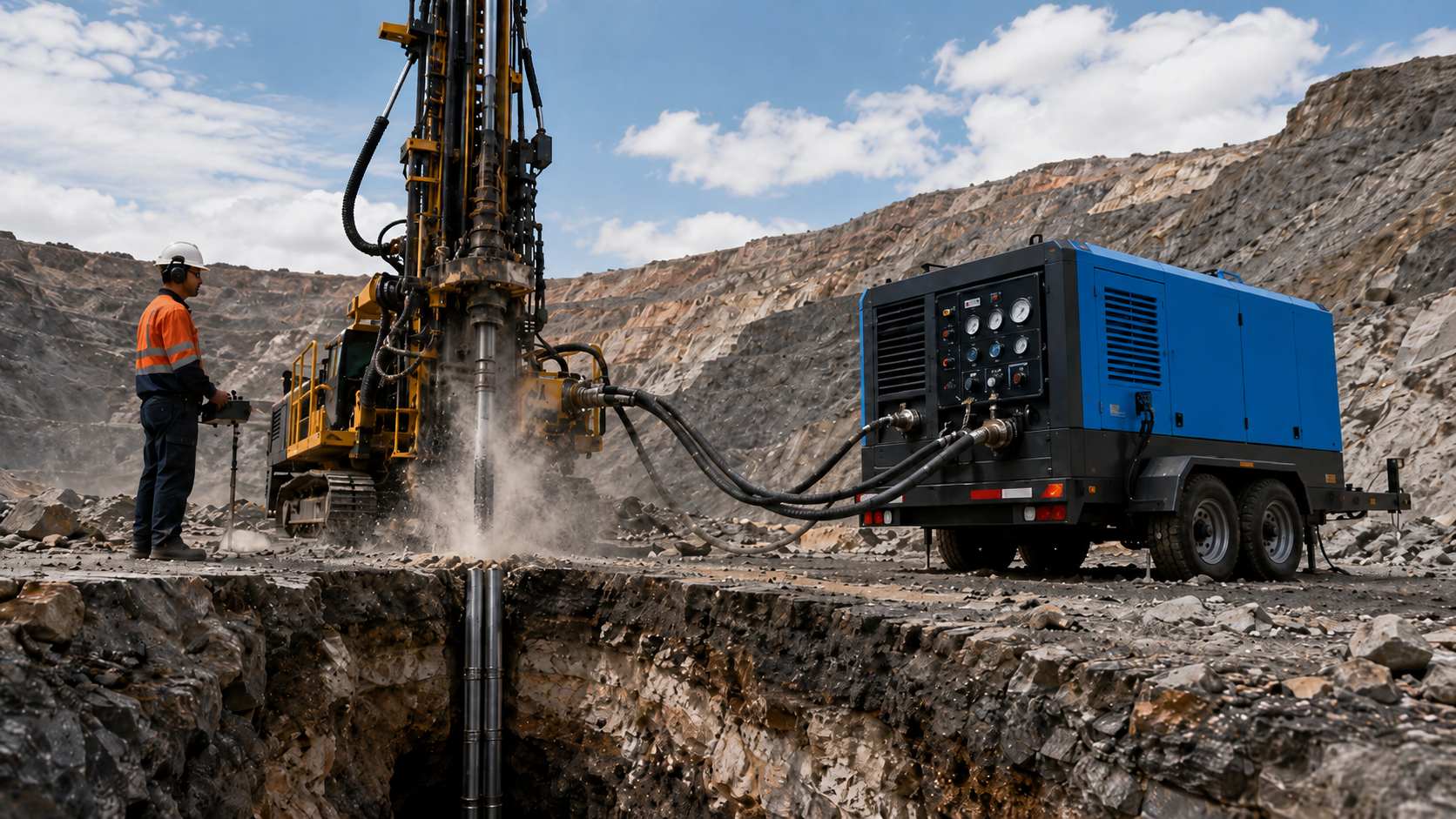
The air compressor is the heart of the down-the-hole (DTH) drilling operation, providing the compressed air necessary to power the hammer in the drill bit as well as to remove rock cuttings from the bore hole in efficient manner. Choosing the proper air compressor for your application is crucial in order to achieve the required penetration as well as to maintain a stable hole and to run the equipment in an efficient manner. All three parameters of pressure, airflow, and capacity interact with each other in a significant manner and have to be considered in order to choose a proper air compressor for effective drilling operations and for proper care of equipment in order to achieve long life of same.
What Key Factors Determine the Right Air Compressor for DTH Drilling?
When selecting the best air compressor for use in oilfield operations there are several parameters to evaluate in order to achieve optimal drilling efficiency at a competitive cost.
Pressure Requirements for Efficient DTH Drilling
One of the most important factors that affect DTH operations is the pressure. Pressure affects the amount of energy that is delivered by the hammer to the rock and as such the rate of penetration. Typically pressure ranges from 100 psi to 500 psi, depending on rock hardness and specific well bore conditions. It is crucial to maintain the correct pressure range as low pressure results in slow penetration due to less energy release with each hammer strike, whereas high pressure can cause increased wear on internal components and on the seals of the hammer. Maintaining the correct pressure range will help ensure optimal performance while keeping maintenance to a minimum.
The Role of Airflow Volume in Hole Cleaning and Hammer Performance
In addition to pressure, the airflow volume (measured in CFM – cubic feet per minute) also plays a crucial part during the drilling process. This airflow removes the cuttings from the borehole. Should the airflow not be of a sufficient volume, the cuttings could accumulate at the bit face, possibly causing blockages or back pressure. The higher the airflow volume, the deeper the hole is cleaned and the better the hammers are operated, since a constant supply of clean air is fed through the system. The volume of airflow required is matched to the diameter of the borehole and the size of the bit in question, in order to guarantee the smooth running of the system and to prevent any clogging or a drop in flushing efficiency.
How Hole Depth Affects Compressor Selection
When working with deep holes, the depth of the hole has a significant effect on the choice of air compressor required to service the tool. Not only is it necessary to have a sufficient airflow to the drill at hole depth, but it is also necessary for the air to be at a high enough pressure at the tool, taking into account the losses in pressure down the drill pipes. To account for these losses it is necessary to size the air compressor to deliver sufficient energy to the tool at depth. For deep-hole work it is common to use larger air compressors in order to satisfy the required airflow and to ensure that the necessary pressure is maintained at the tool face, even when there are increased losses down longer drill pipe strings.
How Do Environmental and Geological Conditions Influence Compressor Choice?
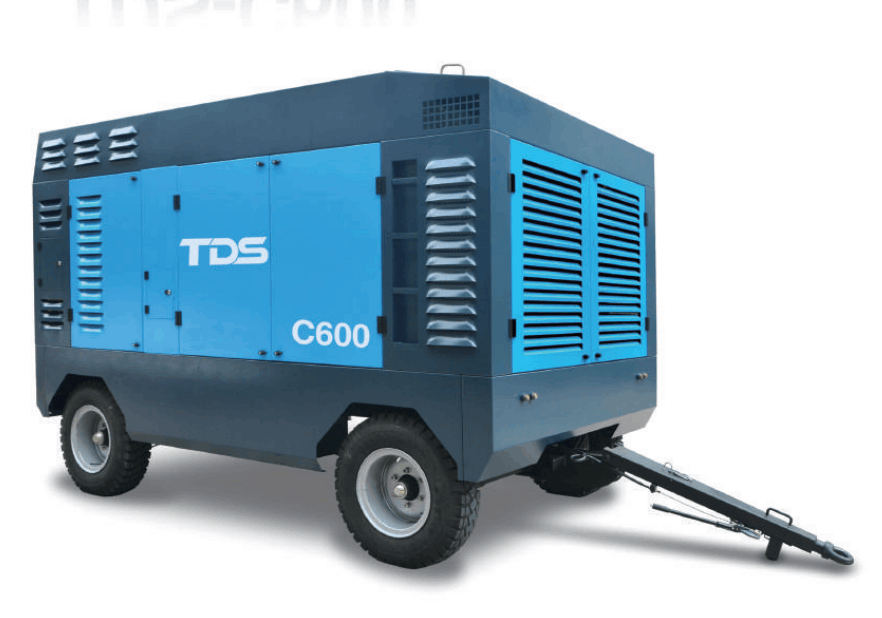
The environmental conditions and the geology will play a huge part in the choice of air compressor for DTH drilling.
Rock Formation Characteristics and Their Impact on Pressure Needs
Rock types require different compressor output than others. Harder rock types such as granite or basalt require higher pressure to be effectively shattered with strong impacts from the hammer. Softer or even fractured rock types on the other hand may only need moderate pressure but good airflow control to prevent overdrilling and excessive cuttings. By adapting the pressure of the compressor to the respective geology the performance on different types of terrain is optimized.
Ambient Temperature, Altitude, and Humidity Considerations
A number of factors relating to ambient conditions of temperature, altitude and humidity can affect a compressor’s efficiency and reliability. High altitude causes low air density and a compressor will have to perform at higher capacity to operate at the same working pressure at sea level. Under very low temperatures the risk of moisture in the air lines to suffer condensation and under very hot temperatures the lubrication system and engine cooling system will be put under a great deal of strain. Selecting a correct compressor with adequate thermal properties will allow the unit to operate effectively in varying environments.
What Are the Technical Specifications to Evaluate Before Purchase?
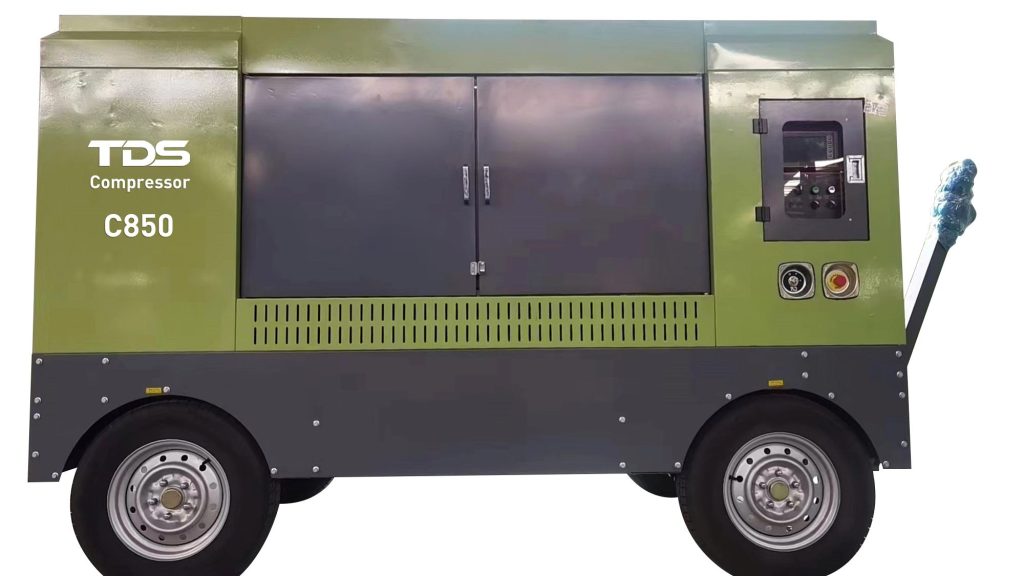
Before purchasing an air compressor for DTH drilling, the compatibility of the compressor with the current equipment must be analyzed technically.
Matching Compressor Output with DTH Hammer Specifications
As different DTH hammers have different Air Consumption requirements as recommended by the manufacturer, it is critical to confirm the compressor discharge capacity (CFM) to ensure sufficient air supply to operate the hammers efficiently without overloading or starving them.
Energy Efficiency and Fuel Consumption Metrics
Assessing fuel-to-air output ratios helps to select the most cost-effective energy efficient solution, without sacrificing output. By running continuously, continuous drilling operations present a significant opportunity to keep costs down by running your compressors efficiently at low load. Compressors equipped with Variable Speed Drive (VSD) technology are capable of maintaining constant delivery of air at optimal fuel consumption, even at low load.
Maintenance Requirements and Reliability Factors
Another consideration important for operation in the remote areas and harsh environment of DTH drilling projects is Maintenance accessibility. Our compressor design makes servicing of filters, valves, oil separator and cooling system very easy by access points from outside. On schedule maintenance will increase life of the equipment and it ensures operation under arduous drilling operation.
How Does TDS (The Drill Store) Support Reliable Air Compressor Solutions?
TDS (The Drill Store) stands out as a trusted supplier specializing in industrial-grade compressors tailored for DTH applications across multiple sectors including mining, quarrying, geothermal exploration, and construction projects. The company offers a comprehensive range of high-performance models engineered for durability under extreme field conditions. Each unit is optimized for energy efficiency through advanced design features that minimize fuel usage while maximizing output stability. TDS provides technical consultation services assisting clients with product selection based on specific project parameters such as depth range or formation type. Their after-sales support network ensures timely delivery of spare parts and maintenance assistance worldwide. With an emphasis on reliability and long-term operational value, TDS continues to be a preferred partner among professionals seeking dependable drilling air compressor solutions.
Conclusion
Choosing the right air compressor involves a number of considerations: the pressure required, the volume of air flow required and the depth of the holes that you intend to drill. This can all be related to the geological information that has been gathered prior to the fieldwork taking place. The correct combination of air pressure and the efficient use of the air for effective borehole cleaning will result in the best penetration rate. The operating environment can also have an effect on choosing the correct air compressor, for example operating at high altitude or in low temperatures. TDS work with suppliers who offer a technically sound range of equipment that has been validated and offer the operator expert advice to allow them to work in a variety of different drilling environments.
FAQs
What is the ideal pressure range for typical DTH drilling operations?
For reference the ideal pressure is between 100 psi and 500 psi depending on the hardness of the rock being drilled, the size of the drill bit being used, and the desired rate of penetration.
How do I calculate the required airflow (CFM) for my drilling project?
To choose the correct airflow for a Pile Driving Hammer, the borehole diameter, the hammer model and depth are important. The information can be retrieved from the manufacturer’s documentation and will be matched correctly.
Why should I choose a supplier like TDS for my air compressor needs?
TDS provides technically verified compressors for DTH-Operations which are designed in a way to offer the highest reliability and efficiency. The best service support throughout the life time of the articles is ensured as well.
 French
  English
  Portuguese
  Spanish
  Russian
  Italian
  German
  Dutch
Dutch  Arabic