
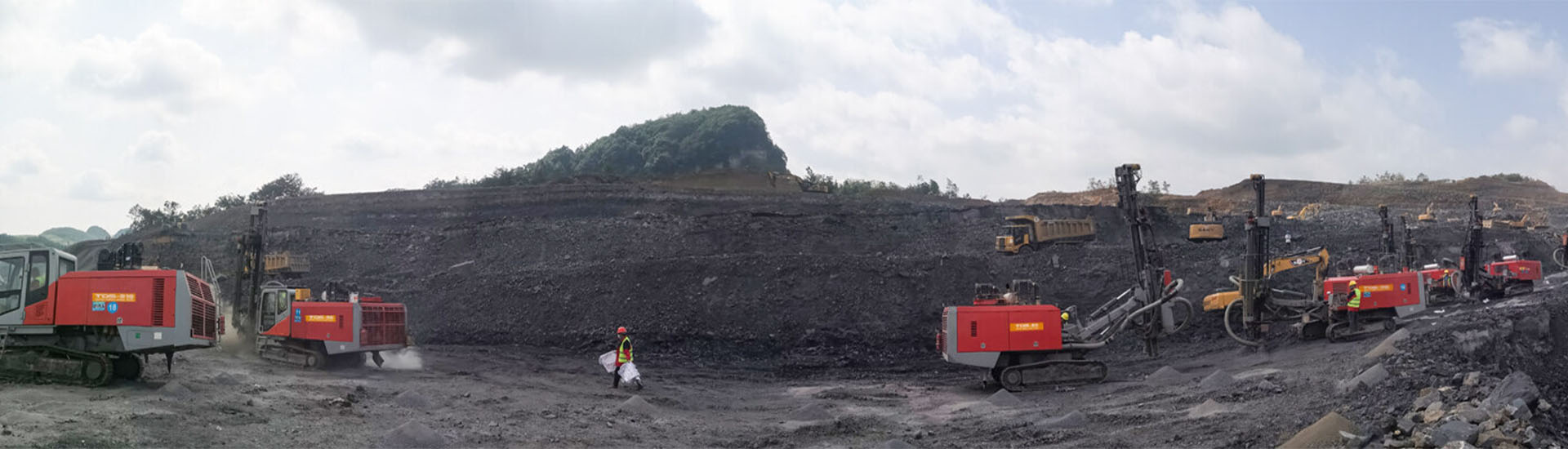
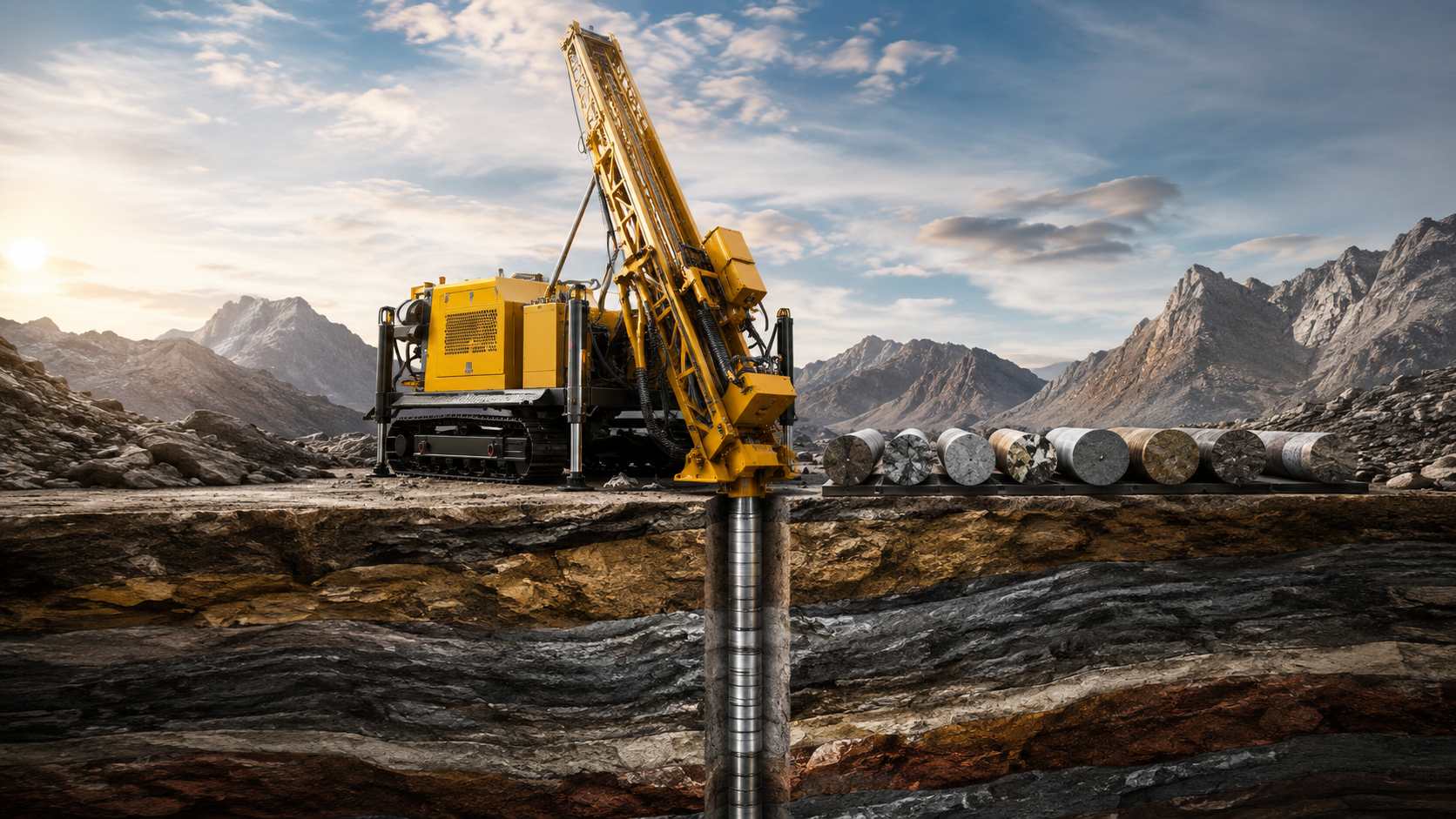
Selecting a surface core drilling rig for mining exploration begins with two targets: planned hole depth and usable core recovery. A machine may carry an impressive depth rating yet underperform if pullback, torque, hoisting, flushing, rod handling, or mast geometry do not match the program. Recovery depends just as much on the barrel, bit, drilling fluid, run length, ground condition, and operator response. Buyers should therefore assess the rig as part of a complete drilling system, not as a stand-alone machine chosen from one headline number.
How should planned depth be translated into rig capacity?
Published depth ratings normally assume a particular rod series, hole angle, formation, and operating setup. Friction, deviation, groundwater, casing, and broken ground can reduce practical capacity.
Which specifications determine reachable depth?
Pullback must cover drill-string weight plus resistance from a tight or deviated hole. Main-hoist capacity, mast length, feed stroke, chuck force, foot clamp, and wireline winch affect tripping efficiency and safe rod handling.
Rotation torque becomes more important with larger holes, casing, and resistant formations. Speed range must suit the bit and rock. High rpm without adequate low-speed torque leaves little flexibility at the collar or in difficult zones.
Why must depth be stated by rod size?
BQ, NQ, HQ, and larger systems differ in weight, stiffness, core diameter, and annular clearance. Smaller rods may extend theoretical depth, but they recover less core and can be less stable in fractured or deviated holes.
The proposal should state capacity for the exact rod series, inclination, and casing plan. A general maximum-depth figure is not enough for equipment approval.
Which drilling setup protects core recovery and sample quality?

Recovery percentage matters, but geological teams also need intact fractures, limited washing, reliable orientation, and enough core diameter for logging and testing.
How do barrels and bits affect recovery?
Double-tube wireline barrels suit many competent formations because the stationary inner tube shields the core from direct rotation. Triple-tube systems add a liner and are often considered for soft, fractured, weathered, or easily disturbed material.
Bit selection should reflect hardness, abrasiveness, fracture pattern, and flushing. An aggressive bit may drill quickly but disturb weak core. A worn or unsuitable bit can vibrate, polish, deviate, or grind the sample.
Which operating choices cause core loss?
Excessive feed can fracture core or deflect the bit. Incorrect rotation may create vibration or heat. Flushing must cool the bit and remove cuttings without washing soft formations.
Run length should be shortened when entering faults or broken ground. Operators need to watch penetration rate, torque, pressure, returns, and vibration. Continuing after core blockage usually sacrifices sample quality for little useful advance.
How should ground conditions and site access influence rig selection?
One exploration hole may pass through overburden, competent rock, clay seams, faults, and water-bearing fractures. The rig must support casing and parameter changes without lengthy reconfiguration.
What changes in unstable formations?
Unstable collars may require casing or a casing-advance method. Confirm that torque, pullback, mast clearance, and clamping arrangements suit the selected casing. Pump capacity must match hole diameter, cuttings load, and expected fluid loss.
In fractured zones, shorter runs, lower feed, suitable fluids, and triple-tube tools may improve recovery. The procedure should also preserve the sample for logging and laboratory work.
How do mobility and climate affect the choice?
Crawler rigs suit uneven access and repeated moves; truck or skid units may fit established roads and prepared pads. Review total weight, transport width, ground pressure, leveling range, setup footprint, and slope limits.
Cold, heat, altitude, dust, and humidity affect engines, cooling, filtration, hoses, electrical parts, and lubricants. Daily service points should remain accessible on the drill pad.
What quality and safety checks are needed before mobilization?
Core rigs combine heavy rod strings, rotating equipment, wireline systems, and high-pressure hydraulics. Inspection should verify condition, capacity, guarding, and control response before field deployment.
Which components require close inspection?
Check the mast, welds, pins, feed system, rotation head, chuck, foot clamp, hoists, wireline winch, rod handler, hoses, valves, pump, engine, emergency stops, and guards. Look for leaks, worn jaws, damaged threads, abnormal noise, and uncontrolled motion.
Clarify whether quoted pullback is gross or net and whether capacity changes with mast angle, feed speed, or hydraulic settings.
What should a drilling trial measure?
Use the intended rod system and representative tooling. Record torque response, rotation range, feed control, pullback, pump output, rod-change time, vibration, and operating temperature.
Inspect recovery, core breakage, washing, bit wear, deviation, and time per run. A brief test in easy ground does not establish suitability for deep holes involving casing, faults, or water inflow.
How should buyers compare suppliers and total ownership cost?
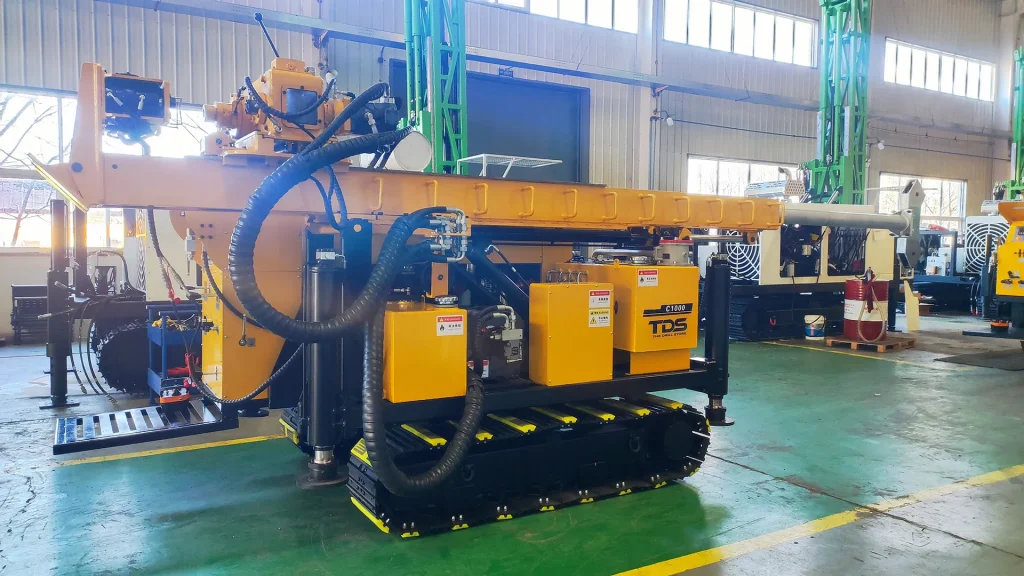
Purchase price is only one cost. Parts availability, tooling compatibility, service access, training, and technical support determine how long a rig remains productive at a remote site.
What belongs in the technical proposal?
Require rod-specific depth ratings, pullback, torque, speed range, feed stroke, mast capacity, hoists, mud pump, engine, hydraulic system, rod handling, dimensions, weight, and transport configuration. Separate optional equipment from the standard package.
Manuals, maintenance schedules, parts lists, hydraulic diagrams, recommended spares, and tooling interfaces should be available before shipment.
Which commercial controls reduce downtime?
Confirm spare-parts lead time, commissioning, operator training, troubleshooting, warranty procedure, and local availability of filters, seals, hoses, jaws, and bearings.
Retain the approved configuration and component list. Changes to the engine, pump, valves, rotation head, controls, or safety system should be disclosed before delivery, especially for fleets using standardized spares.
How can a drilling equipment supplier support exploration planning?
TDS (The Drill Store) supplies geotechnical drilling equipment for exploration, site investigation, water, and related drilling work. Buyers can provide target depth, rod series, core diameter, hole angle, formation description, casing plan, site access, climate, and drilling schedule. Equipment review should cover pullback, torque, rotation range, mast capacity, hoists, mud pump, rod handling, transport dimensions, and tooling. The quotation should identify the rig configuration, included accessories, recommended spares, documentation, training, commissioning, delivery terms, and warranty process. Inspection criteria and accepted machine data should also be documented before shipment. Matching these details to the approved drilling program helps prevent depth assumptions, tooling gaps, and avoidable delays after mobilization.
Conclusion
Selecting a surface core drilling rig for mining exploration requires more than checking maximum depth. Rod size, pullback, torque, hoisting, pumping, mast design, ground conditions, and site access must fit the planned holes. Core recovery then depends on tooling, drilling fluid, run length, and operator control. A rig that balances depth capacity with sample protection, safe rod handling, maintainability, and parts support is more useful than one selected from a single specification.
FAQs
1. What rig capacity is needed for a 1,000-meter core drilling program?
Capacity depends on rod size, hole angle, casing depth, friction, and formation. Select practical pullback and hoisting margin rather than relying only on the published depth rating.
2. Does a smaller drill rod always allow greater depth?
Smaller rods reduce string weight and may increase theoretical depth. They also recover a smaller core, provide less stiffness, and may be unsuitable for unstable or strongly deviated holes.
3. Which core barrel is suitable for fractured formations?
Triple-tube wireline barrels are often considered for fractured, soft, or easily disturbed ground because the added liner protects the sample. Bit choice and shorter runs remain important.
4. How can operators improve core recovery?
Use suitable tooling, control feed and rotation, maintain appropriate flushing, shorten runs in broken ground, monitor drilling response, and stop before blocked core starts grinding inside the barrel.
5. What should buyers ask a surface core drilling rig supplier?
Ask for rod-specific depth ratings, pullback, torque, speed, hoist and mast capacities, pump specifications, tooling compatibility, transport details, manuals, recommended spares, training, commissioning, and warranty procedures.
 French
  English
  Portuguese
  Spanish
  Russian
  Italian
  German
  Dutch
Dutch  Arabic