
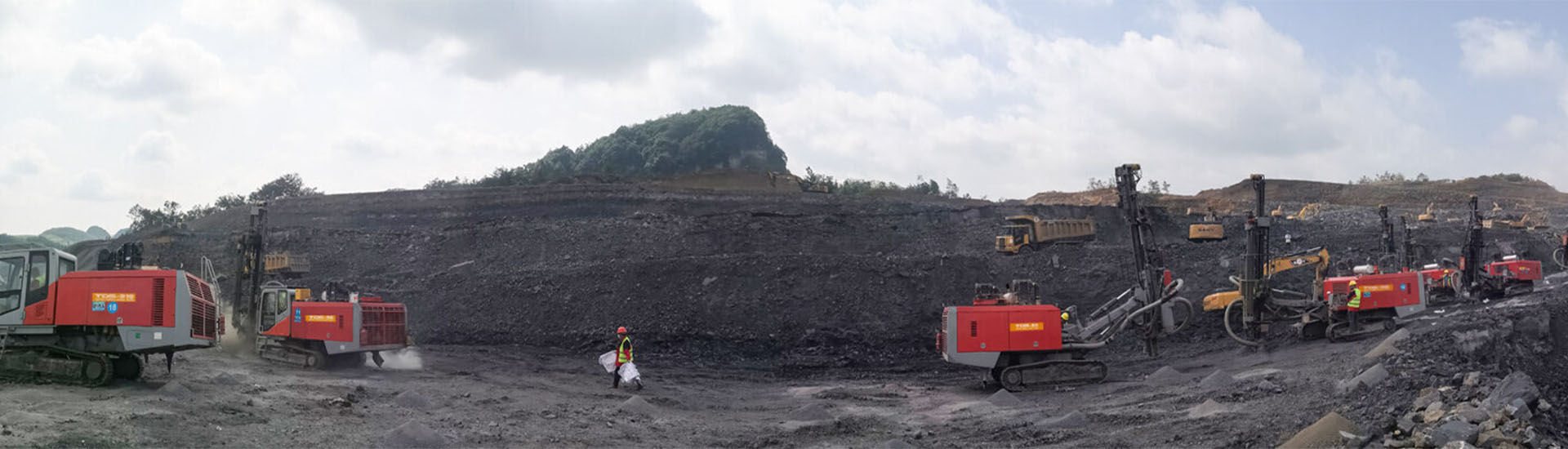
A DTH drilling rig for open pit mining must complete a pattern of holes within the available shift. Down-the-hole, or DTH, describes a drilling method in which the percussion mechanism works inside the hole. Selecting the machine involves more than checking its diameter range: the crew also needs to reach each collar, position the mast and keep the rig working between service stops.
For buyers comparing full hydraulic DTH drilling rigs, a bench work plan gives those requirements a common basis. It turns a general request for a mining rig into a configuration that can be reviewed against actual work.
Turn the Bench Plan into a Rig Duty
Start with the mine’s approved hole plan. The purchasing task is to translate that plan into machine requirements, including the routine holes and the conditions that could interrupt them.
Separate Hole Depth from Bench Height
Bench height alone does not specify drilling depth. Inclined holes and any approved subdrilling allowance change the length the rig must drill. Subdrilling is the portion extending below the intended bench floor; its amount comes from the blast design.
The equipment enquiry should state actual hole lengths and angles. It should also distinguish the usual diameter from occasional requirements. Otherwise, two suppliers may propose machines for different workloads while appearing to answer the same request.
Describe the Work Available in a Shift
A penetration rate measures only part of the cycle. Moving to the next collar, leveling, starting the hole and handling additional lengths all take time. So do refueling and scheduled service.
For a useful comparison, give the number of holes and total metres required per shift alongside the time available. Existing shift records can show whether drilling or the work between holes is the larger constraint. That distinction matters when deciding which features deserve the budget.
Match Crawler Movement and Mast Positioning to the Bench
The hole plan establishes where the machine has to work. Its layout now becomes a positioning problem: can the carrier and mast reach those positions with room for the complete operation?
Check the Working Space Around the Carrier
A crawler drill rig needs space to turn, align and leave the pattern. A width measurement on the access ramp does not establish that there is enough room on the working bench. The plan also needs to show supporting vehicles and, where used, a separate compressor and its hoses.
Include ground conditions and the site’s defined operating boundaries in that review. A published climbing figure concerns a specified travel condition; it should not be treated as permission to drill on a slope or approach a bench edge.
Review Positioning as a Repeated Task
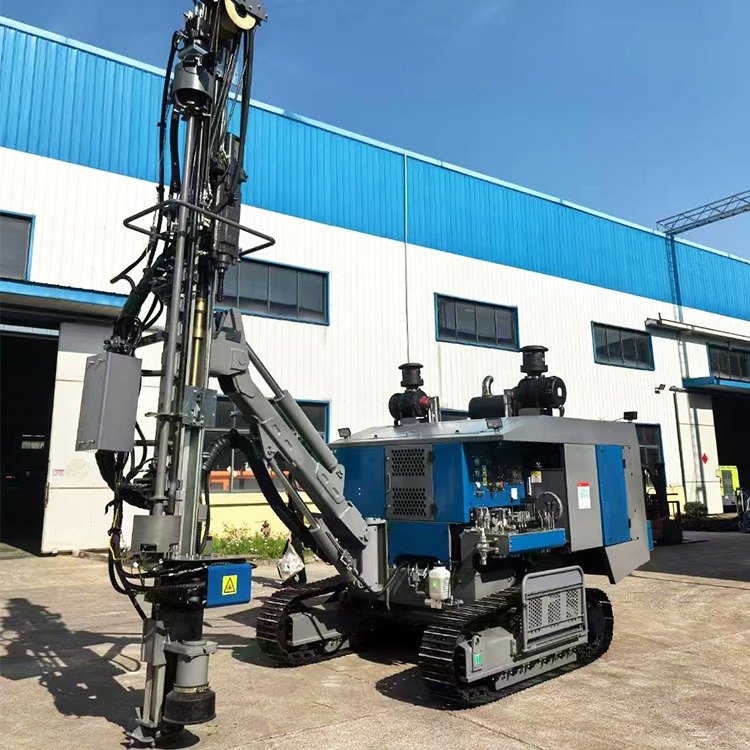
Il TDS 650 piattaforma di perforazione DTH idraulica completa is listed with a heavy construction-machinery chassis and dual rotary motors. Those are relevant features to discuss, but they do not establish its working reach or setup time.
For the proposed machine, review mast movement, alignment controls and leveling arrangements against the planned holes. A demonstration should include repositioning between collars. Watching a rig drill one conveniently located hole leaves that part of the comparison unanswered.
Keep the Hydraulic DTH Rig Working Through the Shift
Once positioning is feasible, look at the systems that support continued operation. Dust handling, air supply and maintenance access affect how much of the scheduled shift remains available for drilling.
Make Dust Collection Serviceable
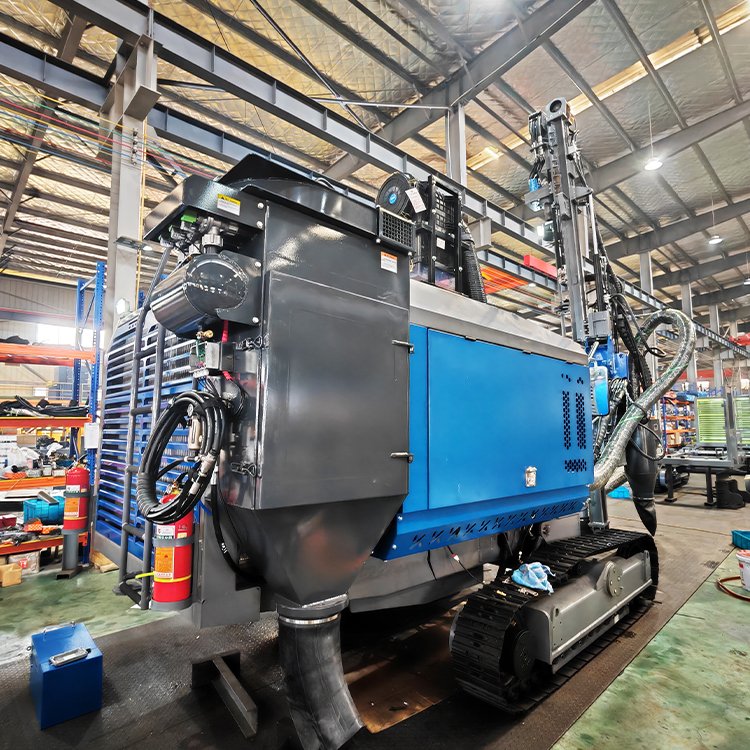
TDS lists dry dust collection on the 650. The useful questions concern how the hood works around the collar, how collected material is emptied and how the crew reaches the filters. Filter access should be reviewed with the machine in its normal working arrangement.
A collector being fitted does not, by itself, establish workplace dust compliance. Its condition, correct operation and the site’s exposure assessment still matter. Include the intended dust-control arrangement in the equipment proposal rather than leaving it as an unnamed accessory.
Confirm the Installed Air and Cooling Arrangement
An integrated rig carries its compressor; a separate arrangement requires another machine to position and service. This changes the bench layout and relocation work. Neither arrangement removes the need to confirm air delivery for the proposed drilling duty.
The supplier also needs the site’s altitude and expected temperatures when reviewing the power and cooling configuration. A demonstration under mild conditions cannot establish continuous operation at the hottest site conditions. Ask which operating limits apply to the offered equipment.
Compare TDS Configurations Against the Same Duty
The requirements above provide a basis for reviewing the TDS 910 piattaforma di perforazione DTH idraulica completa. Its current page describes an integrated machine with a 90–138 mm hole range, a listed depth of 21 m and a 6+1 magazine for 3 m lengths. Those entries make it a candidate for review within that range, rather than proof of suitability for every mine.
Use the same questions for each candidate:
|
Bench requirement |
Configuration to review |
Evidence needed |
|---|---|---|
|
Planned lengths and angles |
Mast movement, feed and available depth |
Current specification for the offered setup |
|
Frequent collar changes |
Carrier positioning and leveling |
Timed moves on a representative layout |
|
Long drilling shifts |
Air supply, cooling and service access |
Operating limits and maintenance schedule |
|
Dusty collar conditions |
Hood, collector and filter access |
Demonstration and site assessment |
Where a webpage and quotation differ, resolve the difference in the signed specification. Compressor make, engine variant and standard equipment should identify the actual machine being supplied.
Define the Acceptance Trial Before Ordering
A trial can connect the configuration to the required work. Agree its scope before the order so that both parties know what is being demonstrated and what remains a site assumption.
Record complete hole cycles, including positioning and service interruptions, with the rock and hole conditions noted. Assess completed depth and alignment as well as elapsed time. A demonstration in easy ground should not become a promised shift output for different conditions.
Open Pit Drilling Rig Support from TDS
TDS supplies mining machinery and drilling solutions and lists technical support and commissioning services. Start an enquiry with the routine holes and a brief bench description. Request model information and a configuration quotation, then agree the trial, documentation and location-specific support scope during review.
Conclusion
Choose an open-pit DTH drilling rig against the work it must repeat: drill the planned hole, reposition and remain serviceable through the shift. A comparable proposal connects those tasks to the carrier, mast, dust collection and installed power systems. The acceptance trial should test that connection before delivery expectations are fixed.
FAQs
Does a maximum depth rating mean the rig drills that depth in one pass?
No. Single-pass depth and total depth are different. Confirm the usable feed travel and additional handling required for the planned hole length.
Can a rig work across ore and waste benches?
Potentially, if its configuration suits both duties. Give the supplier separate descriptions where hole dimensions or ground conditions differ; one bench’s drilling record may not represent the other.
What if the mine has no drilling records yet?
Use the approved hole plan and available geological information for an initial proposal. Mark the unknown conditions and agree how representative testing will be used to refine the operating assumptions.
 Italian
 English
 Portuguese
 Spanish
 Russian
 German
 French
 Dutch
 Arabic