
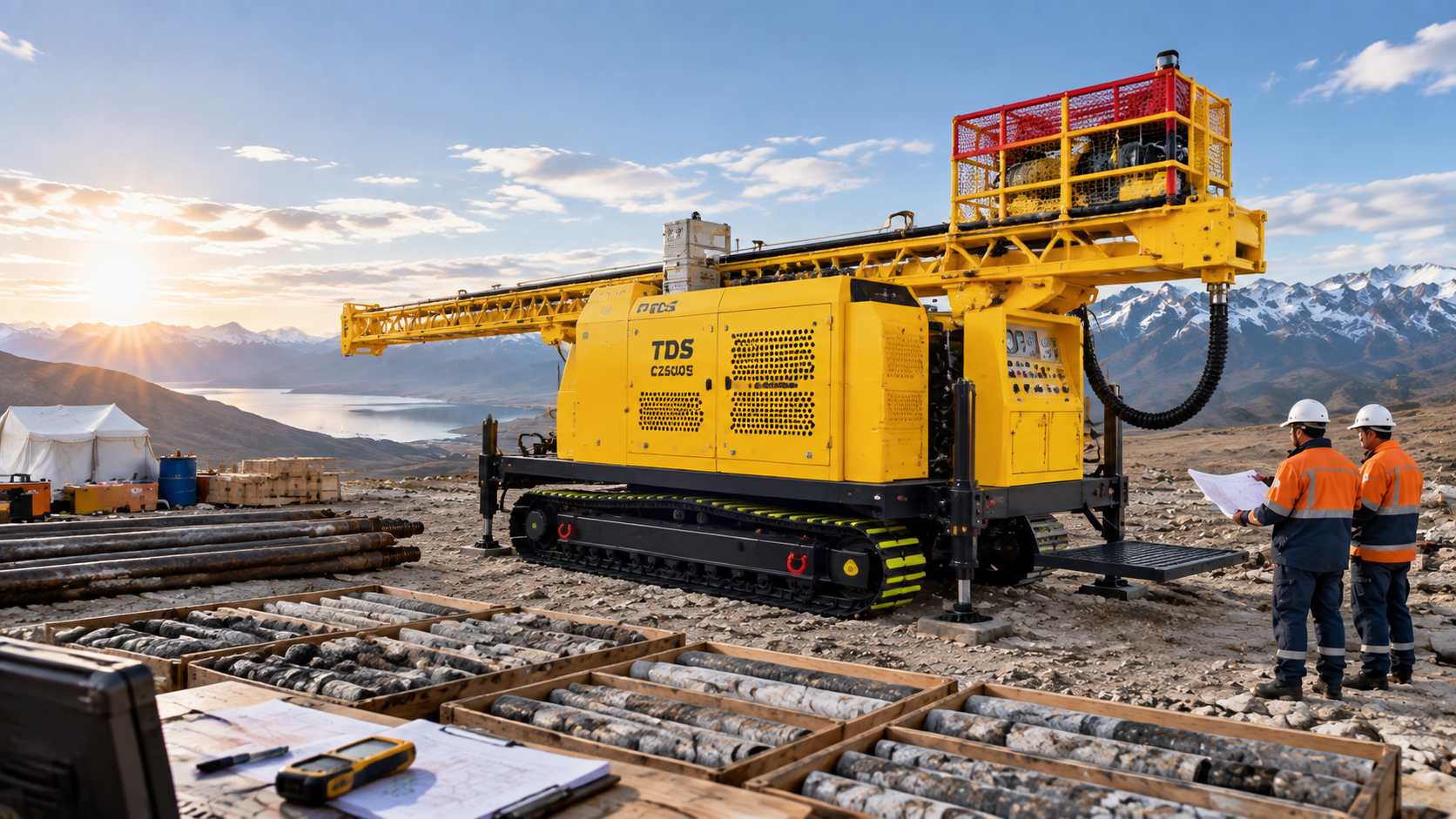
Deep core drilling projects beyond 1000m require more than selecting a drilling rig with a large depth rating. At this depth, the drilling program depends on how well the geological target, hole design, drill string, tooling system, and field conditions work together. A decision made during the planning stage can influence core recovery, drilling stability, maintenance requirements, and operating efficiency throughout the project. For exploration companies, the focus should be on building a drilling plan that matches the underground conditions with the complete drilling package.
What Should Be Defined Before Starting a 1000m+ Core Drilling Project?
A deep core drilling program begins with understanding the exploration target and expected underground conditions. Equipment selection comes later, after the technical requirements of the hole have been established.
Define the Geological Target and Hole Design
Before preparing a drilling package, several project details need to be clear:
| Project Factor | Influence on Drilling Plan |
|---|---|
| Target depth | Determines drill string length, equipment capacity, and operating requirements |
| Core diameter | Affects core barrel, rods, tooling, and sample requirements |
| Formation changes | Influences bit selection, drilling parameters, and recovery methods |
| Hole angle and direction | Changes positioning and drilling control requirements |
| Site access | Affects transport, setup, and supporting equipment |
A 1000m+ hole is not simply a longer version of a shallow exploration hole. As depth increases, the drill string becomes heavier, friction increases, and maintaining stable drilling conditions becomes more challenging.
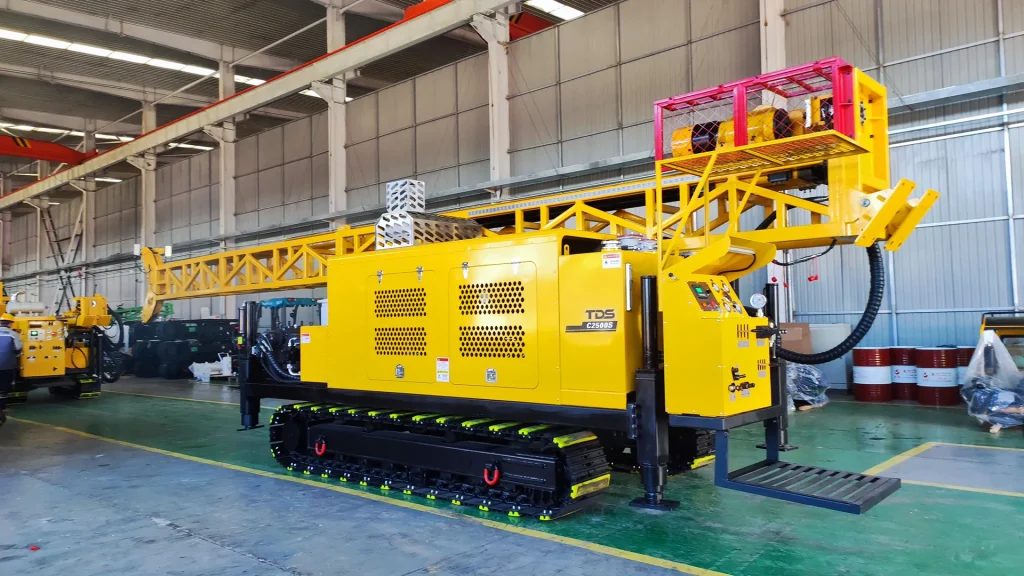
The selected surface core drilling rig needs to match the complete drilling program, including the planned depth, core size, formation conditions, and tooling system.
How Do Depth and Hole Design Affect Core Drilling Rig Configuration?
When drilling depth increases, the relationship between the rig, drill string, and underground conditions becomes more important. A configuration that performs well at several hundred meters may require different planning when the hole extends beyond 1000m.
Consider Mechanical Loads at Greater Depths
A deep hole places continuous load on drill rods, couplings, core barrels, and handling systems. During operation, the rig must manage not only drilling pressure but also rod weight, pullback requirements, and recovery operations.
Important equipment factors include:
- Hydraulic feed control;
- Rotation stability;
- Pullback capability;
- Rod handling arrangement;
- Mast structure;
- Machine positioning.
Maximum drilling depth is only one reference value. Actual performance depends on hole diameter, formation conditions, drilling method, tooling compatibility, and operating practices.
Core Diameter Changes the Equipment Requirements
Core size affects the complete drilling system rather than only the recovered sample.
| Core Requirement | Equipment Consideration |
|---|---|
| Smaller diameter core | Lower tooling load and easier handling |
| Larger diameter core | Higher drilling demand and larger components |
| High recovery requirement | Greater attention to barrel selection and drilling control |
| Changing formations | More flexibility in tooling selection |
The selected core diameter should follow the geological objective. Choosing a larger core size without considering drilling conditions may increase equipment requirements without improving project results.
Which Equipment Factors Become More Important in Deep Core Drilling?
At greater depths, equipment reliability becomes closely connected with project efficiency. A small issue at shallow depth can become much more difficult to correct when hundreds of meters of drill string are already in the hole.
Hydraulic System Control
Hydraulic performance affects rotation, feed pressure, and operator control. Stable hydraulic adjustment allows drilling parameters to be changed when formations become harder, fractured, or inconsistent.
Excessive feed pressure or unsuitable rotation settings can increase tool wear and affect core recovery. For deep projects, consistent control is often more valuable than simply having higher output capacity.
Drill String and Tooling Compatibility
The drilling package includes:
- Drill rods;
- Core barrels;
- Bits;
- Couplings;
- Adapters;
- Flushing components.
These components transfer drilling energy through the entire hole. Poor compatibility may result in vibration, thread damage, lower penetration efficiency, or additional downtime.
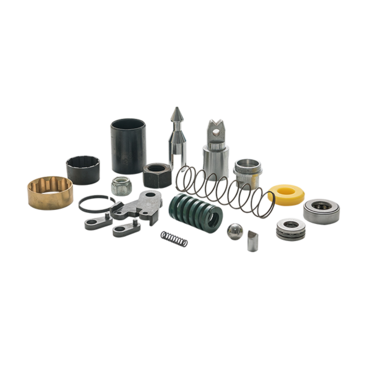
For deep exploration programs, rock drilling tools should be evaluated together with the rig instead of being selected separately after the main equipment has already been confirmed.
How Should Exploration Teams Plan Tooling, Flushing and Core Recovery?
Deep drilling performance depends heavily on maintaining stable conditions inside the borehole. Tool selection, flushing control, and recovery methods all influence the quality of the final samples.
Prepare for Formation Changes
A 1000m+ exploration hole may pass through multiple geological zones. Hard rock, fractured sections, abrasive formations, and weaker layers can require different drilling approaches.
The drilling plan should consider:
- Expected formation sequence;
- Bit selection;
- Core barrel type;
- Rod system;
- Spare tooling requirements.
A single tooling setup may not provide the same performance throughout the entire hole. Preparing for possible formation changes helps reduce delays when underground conditions differ from initial expectations.
Plan Flushing Requirements at Depth
Flushing becomes more challenging as hole depth increases because drilling fluid travels through a longer circulation path. The system needs to remove cuttings effectively while supporting stable drilling conditions.
The flushing plan should consider:
- Hole diameter;
- Drilling depth;
- Formation characteristics;
- Pump capability;
- Fluid requirements.
Additional equipment, including air compressors, may become part of the drilling package depending on the selected drilling method and site conditions.
What Information Should Be Prepared Before Finalizing a Deep Drilling Package?
A complete technical brief helps avoid differences between the planned drilling program and the equipment delivered to the site.
Review the Complete Drilling Package
The project information should include:
- Target depth;
- Planned core diameter;
- Geological conditions;
- Expected rock characteristics;
- Hole direction;
- Site access limitations;
- Required drilling method;
- Tooling requirements.
With these details available, different equipment proposals can be compared against the same drilling conditions.
The review should cover more than the main rig. Drill rods, core barrels, bits, pumps, spare parts, maintenance requirements, and transportation conditions all influence field operation.
Check the Practical Drilling Sequence
A useful review follows the actual work cycle:
- Position the rig;
- Align the hole;
- Begin drilling;
- Add or remove rods;
- Recover the core;
- Prepare for the next drilling section.
If any step depends on an unclear component or additional equipment that was not included in the original plan, the issue should be resolved before mobilization.
Need Help Matching a Deep Core Drilling Package to Your Project?
Deep exploration projects require close coordination between drilling equipment, tooling systems, and field conditions. Beijing The Drill Store Machinery Equipment Co., Ltd. (TDS) provides drilling equipment and related solutions for exploration and geotechnical applications. Its surface core drilling equipment can be configured according to different drilling requirements, including target depth, core diameter, formation conditions, tooling compatibility, and site environment. The suitable drilling package depends on the complete operation, including the rig, drilling tools, flushing system, spare parts, and field requirements rather than one individual specification.
Conclusion
A 1000m+ core drilling program is built around many connected decisions rather than a single equipment specification. Geological targets, hole design, drill string management, tooling selection, hydraulic control, and flushing performance all influence drilling results. A suitable drilling plan allows exploration companies to evaluate equipment based on actual field conditions instead of relying only on maximum depth figures. The complete drilling system should be considered before mobilization to reduce operational uncertainty during deep exploration work.
FAQs
1. Why Is Deep Core Drilling Planning Different From Shallow Drilling?
Deep drilling involves longer drill strings, higher mechanical loads, more complex circulation conditions, and greater recovery challenges. The complete drilling system needs to be considered instead of only the rig capacity.
2. Does Maximum Drilling Depth Determine Rig Suitability?
No. Maximum depth is only one factor. Core diameter, formation conditions, tooling selection, hydraulic capability, and site requirements also affect whether a rig fits the project.
3. How Does Core Diameter Affect Equipment Selection?
Core diameter influences rods, core barrels, bits, and drilling requirements. Larger core sizes may require different equipment configurations and higher drilling capacity.
4. What Information Should Be Prepared Before Selecting a Deep Core Drilling Rig?
The project brief should include target depth, core size, geology, hole direction, site access, drilling method, and tooling requirements.
5. Why Is Tooling Compatibility Important in Deep Drilling?
Drill rods, core barrels, bits, and adapters transfer drilling energy through the hole. Matching these components helps maintain drilling efficiency and reduces unnecessary wear.
 English
  Portuguese
  Spanish
  Russian
  Italian
  German
  French
  Dutch
Dutch  Arabic