
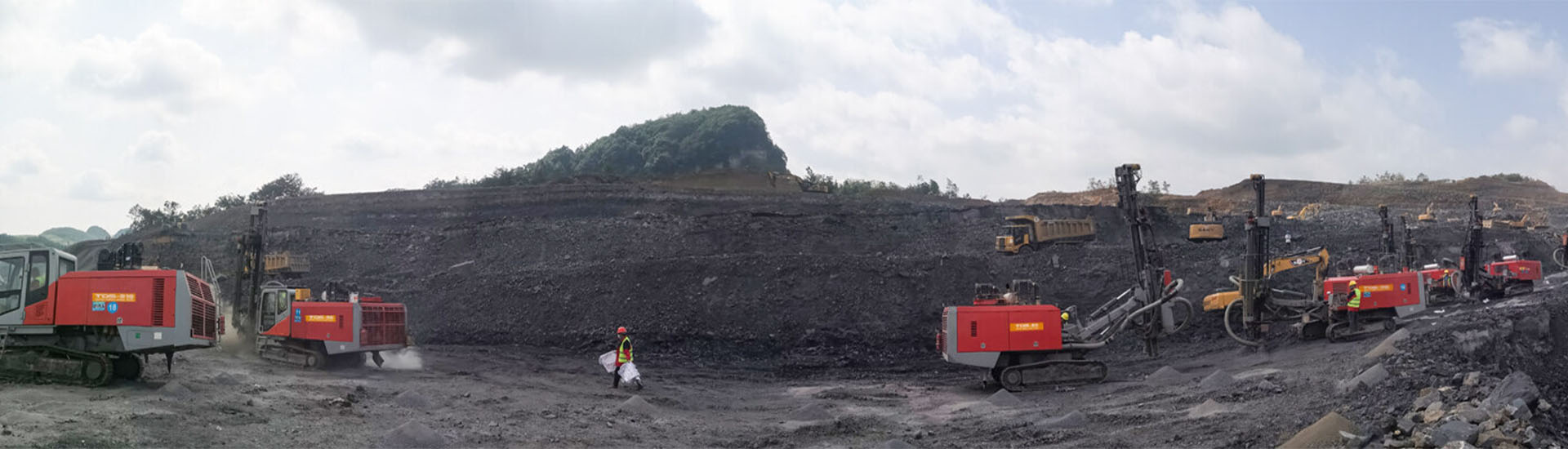
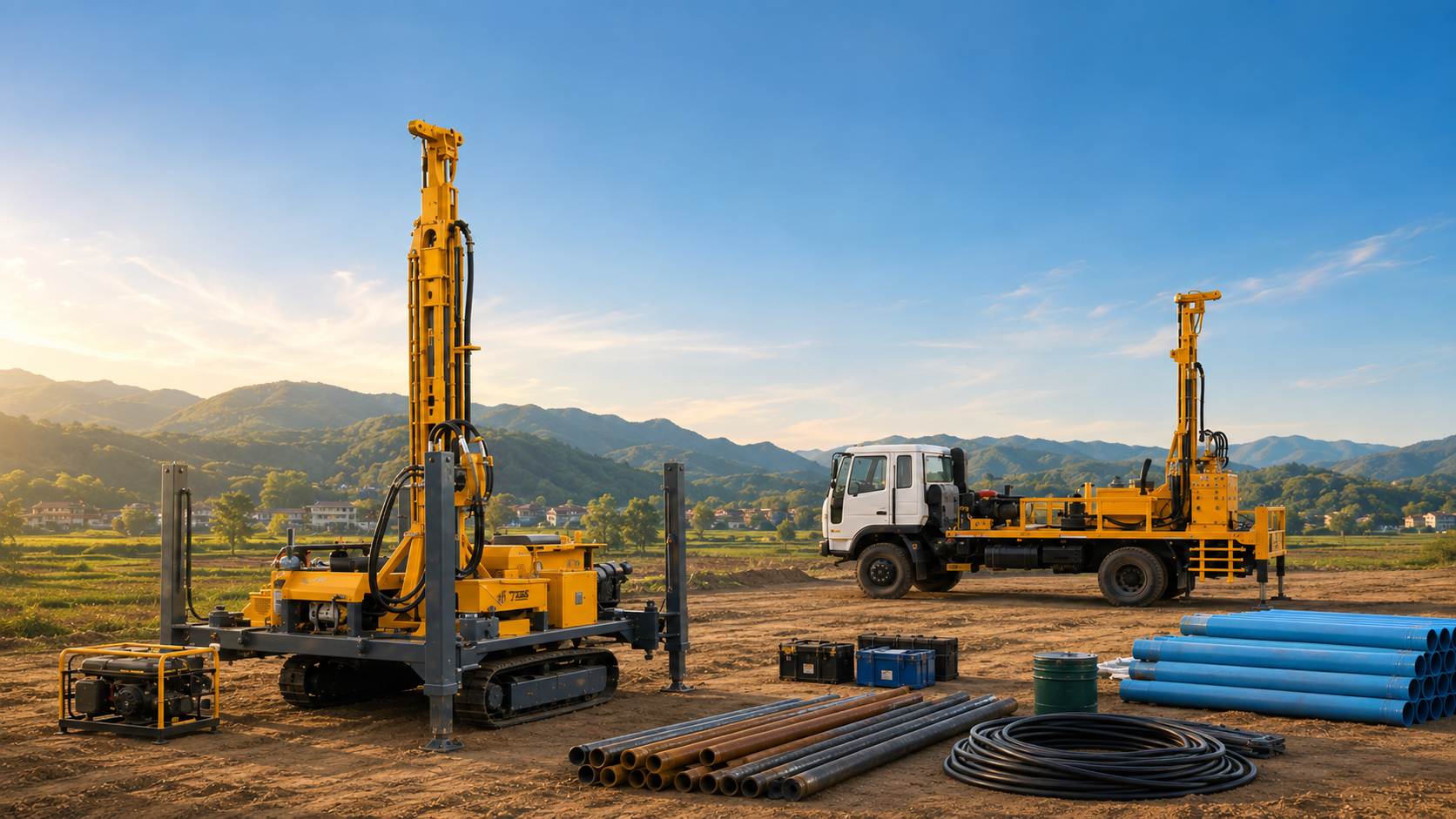
For a rural water supply scheme, the most suitable type of rig cannot be selected from a catalog. By understanding the likely depth, final diameter, geology, drilling method, access, and ancillary equipment needed on the site before requesting a quotation. A machine suitable for a 200-m mud-rotary hole in soft ground may well prove completely inappropriate for a deep hole drilled with a downhole hammer in hard rock. It is a matter of getting the right drilling equipment to finish the holes required, not necessarily the biggest machine possible, since it may involve extra costs due to compressors, pumps, casing, etc., that will not be needed.
What Project Data Should Contractors Define Before Choosing a Rig?
Before comparing water well drilling rig configurations, turn the hydrogeological and construction requirements into a short equipment brief.
Start With the Well, Not the Machine
Record the normal and maximum depths, pilot-hole diameter and final bore diameter, casing and screen sizes, target interval of the aquifer, and whether the ground conditions were such that required temporary casing. The amount of water needed is also important; for example, a well providing water to a village, a well for livestock, and an institutional well may need to have different completion diameters despite having the same drilling depth.
If geology comes from nearby bore logs rather than the exact collar, label it as reference data. Where final depth is uncertain, give suppliers an expected depth and a contingency depth.
| Project Input | Why It Matters | What to Confirm |
|---|---|---|
| Expected / maximum depth | Changes rod load and retrieval demand | Rated depth for the proposed method |
| Bore and casing diameter | Affects bit, casing, flushing, and torque | Usable diameter range and tooling |
| Formation sequence | Drives mud rotary, DTH, or mixed drilling | Recommended drilling system |
| Site access | Limits transport and setup | Weight, dimensions, and mobility |
| Number of wells | Affects utilization and spares | Service needs and wear parts |
Which Drilling Method Fits the Ground Conditions at a Rural Water Site?
The drilling method should be chosen before the compressor or mud pump is sized. On mixed ground, the project may need more than one method.
Match the Circulation System to the Formation
Mud rotary drilling is commonly used where sand, clay, or other unconsolidated material needs fluid circulation and borehole support. DTH drilling is often selected in competent rock because the hammer works at the bottom of the hole and compressed air returns cuttings.
Mixed formations need extra planning. The crew may have to case unstable overburden before changing methods in rock. That affects casing tools, drill pipe, bits or hammers, and flushing equipment. Where irrigation is the main end use, the separate guide to agricultural irrigation drilling covers that application in more detail.
For DTH work, start compressor selection with the hammer maker’s required pressure and air consumption, then consider hole diameter, drill pipe, elevation, and line losses. For mud rotary work, verify pump flow and pressure against hole size, depth, fluid properties, and the return path.
Which Rig Specifications Should Procurement Teams Compare?

Once the hole design and drilling method are clear, depth becomes only one part of the comparison. The rest of the rig must support the same job.
Compare Capacity as a Complete System
Review rated depth, hole-diameter range, torque, rotation range, feed stroke, pullback or lifting force, drill-pipe size and length, mast height, winch capacity, machine weight, and transport dimensions.
Do not compare maximum depth without confirming the drill pipe on which the rating is based. Do not compare torque without looking at rotation speed. And do not treat lifting force as secondary: deep holes and stuck-tool recovery can make it one of the most important working limits.
For remote or steep sites, mobility may decide the shortlist. If the route is narrow, rocky, or sharply graded, the guide to water well drilling in mountainous terrain is a useful companion when reviewing chassis and transport requirements.
The quotation should identify the exact engine, mast, drill pipe, chuck or breakout arrangement, winch, and compressor or mud-pump pairing. A broad model-family range is useful for screening; a purchase order needs a machine-specific configuration.
What Must Be Ready Before the Rig Arrives on Site?
A correctly sized machine can still lose days if the site is not prepared. Rural projects often have long supply lines, limited workshop support, and roads never designed for drilling equipment.
Check Access, Consumables, and Completion Requirements
Walk or survey the final access route. Confirm road width, turning space, bridge or culvert limits, soft ground, overhead restrictions, slopes, and the area available for leveling the rig. If access is weather-sensitive, decide how the route changes after rain.
Plan fuel, water, lubricants, casing, screens, drilling-fluid materials, bits or hammers, drill pipe, hoses, and other essential repair parts in advance of mobilization. Identify local requirements for permits, bore logs, sanitary seals, test pumping, water-quality sampling, and wellhead protection in advance of mobilization.
A practical pre-mobilization checklist is:
- Confirm the latest borehole design and target depth.
- Confirm drilling method, casing, drill pipe, and bit or hammer size.
- Verify compressor or mud-pump compatibility.
- Approve the access route, drill pad, water supply, and fuel plan.
- Pack filters, seals, hoses, lubricants, and common wear parts.
- Confirm permits, completion materials, records, and acceptance tests.
What Should Be Confirmed With the Supplier Before Purchase?
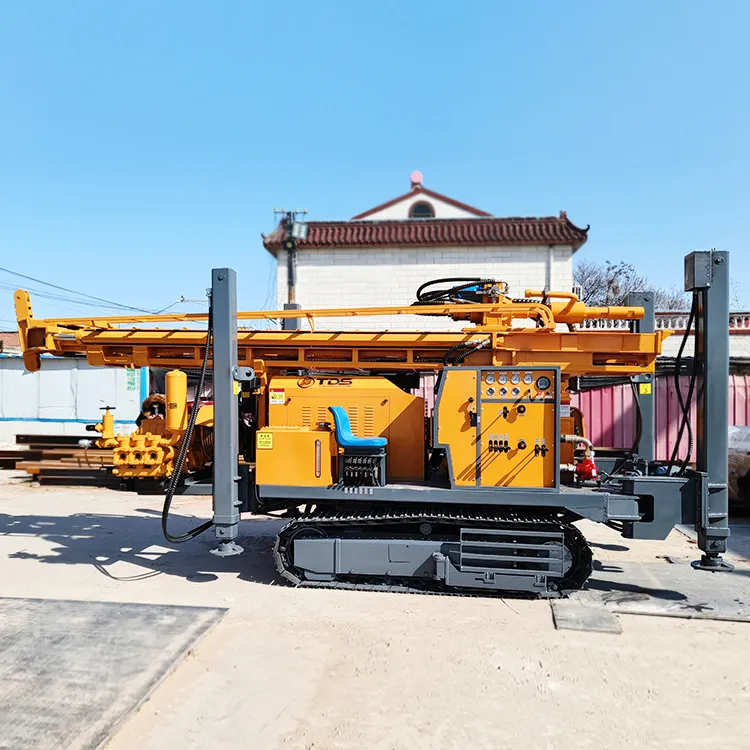
The final supplier review should test the proposed package against the drilling plan. This is where vague specifications need to become verifiable commitments.
Ask for the Exact Offered Configuration
Request a configuration sheet showing rated depth, hole diameter, torque, lifting force, drill-pipe sizes, mast, engine, machine weight, and flushing package. For DTH work, ask for the proposed hammer and compressor pairing. For mud drilling, request the pump model and operating range.
Also ask what is excluded. Tooling, casing accessories, air hoses, mud tanks, spare filters, or commissioning may be separate items.
Before shipment, request that the operator manual, preventive-maintenance schedule, commissioning procedure, troubleshooting route, recommended spare parts, and normal lead times be provided. The next best step is to ask that the supplier complete a one page drilling data sheet and to respond to each item. This will make comparisons easier and reduce assumptions in the purchase order.
How Can TDS Support Rural Water Supply Drilling Projects?
Beijing The Drill Store Machinery Equipment Co., Ltd. (TDS) supplies drilling equipment for water-well, mining, exploration, and construction applications. Its TDS Vehicle-mounted Water Well Drilling Rig family lists TDS180T through TDS1000T models; across the published series, the stated ranges are 180–1000 m drilling depth, 90–800 mm drilling diameter, 4,000–20,000 Nm maximum torque, 12–52 tons maximum lifting force, and drill-pipe diameters of 76, 89, 102, and 114 mm. These are family-level ranges, so the exact model and support equipment still need to be matched to the borehole plan before ordering.
Conclusion
For rural water supply work, rig selection should begin with the borehole design and end with a complete mobilization package. Contractors that identify depth, diameter, geology, drilling method, accesses, flushing requirements, consumables, and applicable local completion rules prior to equipment acquisition have taken the first step to comparing bids. The next step is to extract their requirements in a one-page project data sheet and ask each supplier to return the specific rig, tools, compressor or pump, spares, and exclusions that they will use on the job.
FAQs
1. What Is the Most Important Specification for a Rural Water Well Drilling Rig?
There is no single deciding specification. Depth, bore diameter, torque, lifting force, drill pipe, and flushing capacity must work together. The well design determines which parameter becomes limiting.
2. Is DTH Drilling Always Better for Rural Water Wells?
No. DTH drilling is well suited to competent rock, while mud rotary is commonly used in loose or unstable formations. Some boreholes require casing and a change of method as geology changes.
3. How Much Extra Drilling Depth Should a Contractor Allow?
There is no universal percentage. The allowance should reflect uncertainty in hydrogeological data, casing requirements, formation risk, and whether the quoted depth is normal working depth or the rig’s upper rating.
4. Should the Air Compressor Be Purchased With the Rig?
It can be, but it should be sized from the DTH hammer, hole diameter, required pressure and airflow, drilling depth, and site elevation rather than from rig depth alone.
5. What Information Should Be Sent to a Supplier for an Accurate Quotation?
Send expected and maximum depth, bore and casing diameter, formation description, drilling method, site elevation and access, drill-pipe preference, flushing-equipment needs, number of wells, and transport restrictions. Ask the supplier to state the exact configuration and exclusions in return.
 English
  Portuguese
  Spanish
  Russian
  Italian
  German
  French
  Dutch
Dutch  Arabic