
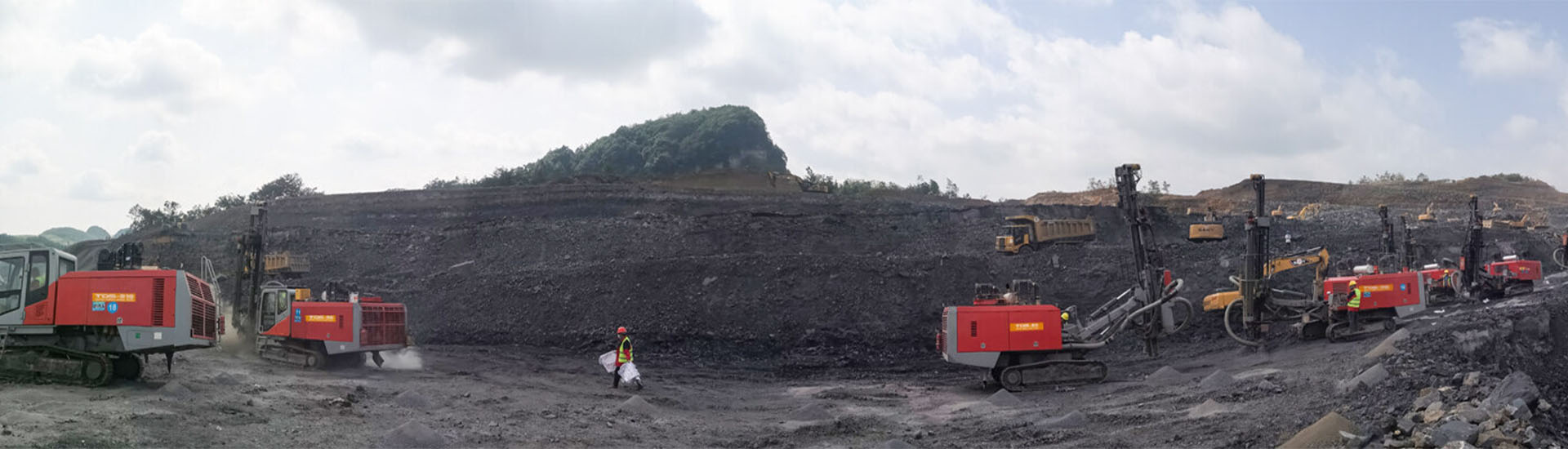
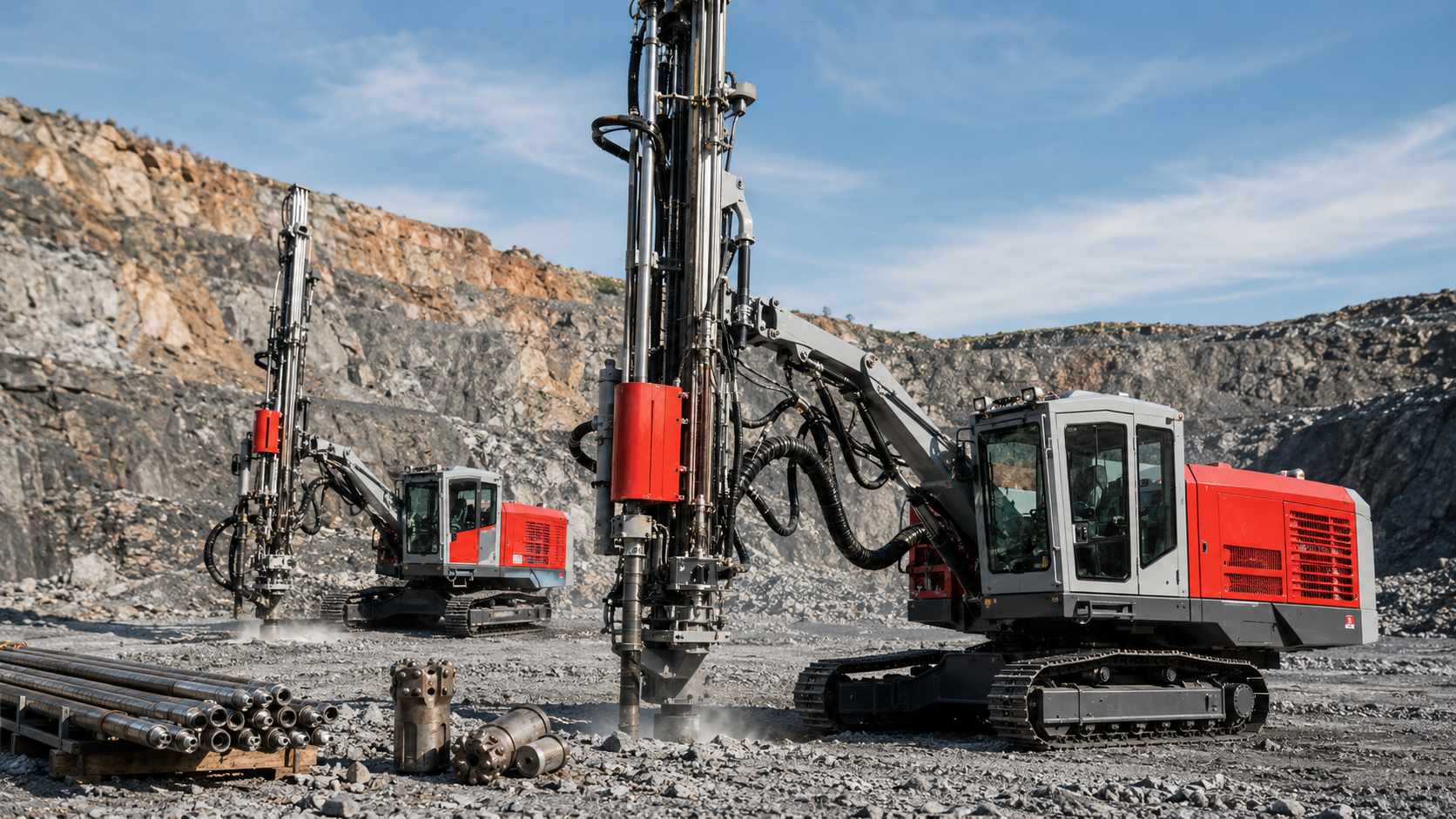
 The Top Hammer drilling method is today one of the most efficient and the most widely used in the field of rock drilling for mining, construction and quarrying. In this method, the impact energy from the rock drill is transmitted through the drill string to the bit, thus achieving highest penetration rates with solid drilling progress also in hardest rock types. Top Hammer Drilling is particularly effective for and cost-optimised in medium to hard rock types. Compared with Down-The down-the-hole-drigging and the rotary drilling- Top Hammer Drilling, due to its low consumption of fuel for drilling, it allows for highest drilling performance especially for short holes up to 40m length. Recent statistics of the International Drilling Equipment Association (IDEA) state an increase in demand of efficient top hammer drilling tools of about 18% within the last three years, triggered by increased investments into the infrastructure and cost-optimised updates of used equipment.
What Is Top Hammer Drilling and How Does It Work?
However, in order to discuss the many uses of Top Hammer Drilling, we must first gain an understanding of the mechanics of the system which comprise Percussion, Rotation and Feed.
The Principle Behind Top Hammer Drilling
In a top hammer setup, the rock drill generates percussive energy that travels through interconnected drill rods before reaching the bit. Each impact crushes rock at the hole bottom while simultaneous rotation ensures even wear and straight hole trajectory. Performance depends on balancing percussion frequency (typically 50–70 Hz), rotation speed (100–200 rpm), and feed force. Excessive feed pressure can cause rod bending or premature bit wear, while insufficient pressure leads to inefficient energy transfer. Energy losses occur primarily through rod length extension, joint wear between couplings, and variations in rock hardness. For example, when drilling in quartzite exceeding 250 MPa UCS, losses can reach up to 30% compared with shorter steel assemblies.
Key Advantages of Top Hammer Drilling in Different Applications
Top hammer is particularly suited to bench drilling in open cast mines and controlled deviation drilling in tunneling. In underground mining where mobility is a problem, Top hammer is also an excellent choice. Field experience has shown that in medium hard rock such as limestone or dolerite, Top hammer can deliver penetration rates of up to 20% higher than comparable DTH drilling. In addition, fuel costs are typically down 10–15% due to the smaller compressors required and the fact that these can be integrated into the hydraulic system of the drill rig. The reduced number of moving air components also results in lower maintenance costs, particularly relevant for operators with large fleets of drilling equipment operating from a number of different sites.
What Tools Are Required for Efficient Top Hammer Operations?
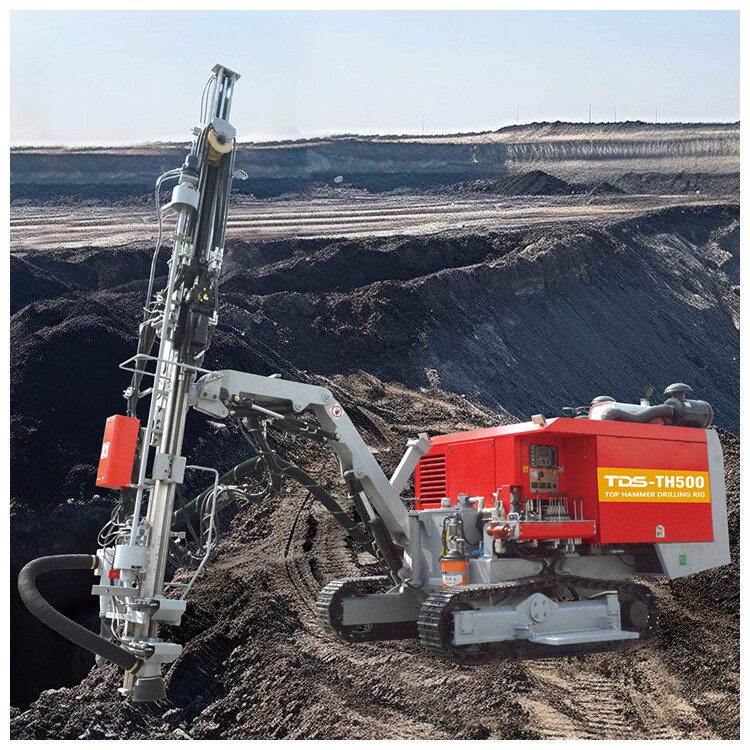
In efficient top hammer drilling the core components and auxiliary equipment of the drilling tool must be perfectly coordinated in order to guarantee constant high drilling performance in all geological conditions.
Core Components of a Top Hammer Drilling System
Rock Drill (Percussion Unit)
The rock drill is the power source for drilling. It converts the hydraulic or pneumatic energy into percussive blows delivered through the shank adapter. The output power of a rock drill can vary from about 10 kW for a compact drilling rig used in construction to more than 40 kW for a heavy duty drilling rig used in mining. In order to increase operator comfort and to extend the life of the components, modern rock drills are equipped with damping systems that absorb the recoil.
Drill Rods and Couplings
Drill rods act as conduits for impact energy transmission. Their diameter—commonly between 32 mm and 51 mm—and thread design directly influence efficiency. Tapered threads like T38 or T45 minimize energy loss at joints while maintaining alignment accuracy. Over time, wear patterns such as shoulder erosion or thread flattening can lead to hole deviation; hence regular inspection after every few hundred meters drilled is recommended.
Shank Adapter and Bit Selection
The shank adapter transfers the impacts and rotation from the piston to the first rod part. There are different types of adapters for different rock drill pistons (T38, T45, T51). Also the bits are compatible to the adapters. The design of the bits is very important for efficient energy transfer. The ballistic button is best for penetration in soft rock, but it wears out quickly on abrasive rock. The spherical button has a longer life and is therefore recommended for granite and basalt where high resistance is encountered.
Auxiliary Equipment Supporting Top Hammer Systems
To support continuous operation of the pump system there are several auxiliary components for increased automation and safety.
Feed Beam and Rod Handling Systems
Modern feed beams for drilling are equipped with linear guides for stabilizing movement during drilling. Modern automated rod handling systems save up to 30 % of manual interventions. Thus, the operator is protected from fatigue and from potential injuries when changing rods. This is particularly important in underground drilling where space is limited.
Flushing Systems (Air/Water Mixture)
The function of the flushing system is to keep the hole clean of cuttings. The most common medium used for flushing is a mixture of air and water, depending on the specific site conditions. In addition to keeping the hole clean, water flushing also has the advantage of cooling the bit, thus extending its life during long penetrations or in high temperature areas.
How Do You Choose the Right Top Hammer Drilling Rig?
Determination of the correct top hammer drilling rig for a specific job is based on several key operational parameters that have to match with the specific requirements of a project.
Factors Influencing Rig Selection
Required hole depth (up to 40m), surface topography (benches vs. very steeply sloping areas) and mobility within tunnels and constricted work areas. The pump’s hydraulic output must match that of the tools. A too-small hydraulic pump will have too little impact for the required work while a too-large one will consume fuel without producing increased work.
Evaluating Performance Metrics Before Purchase or Rental
When assessing the performance of a drilling rig, a number of measurable parameters should be taken into account, such as impact power in kW, percussion frequency in Hz, rotation torque in Nm and feed thrust in tons. According to field data from the 2023 European Mining Equipment Survey, medium range drilling rigs with an impact power of around 25 kW and which have been used in medium hard rock formations, recorded a cost per meter of 12 % less than that achieved by the heavy duty models. This was due to lower fuel consumption and less frequent maintenance.
How Can Maintenance Practices Extend Tool Life?
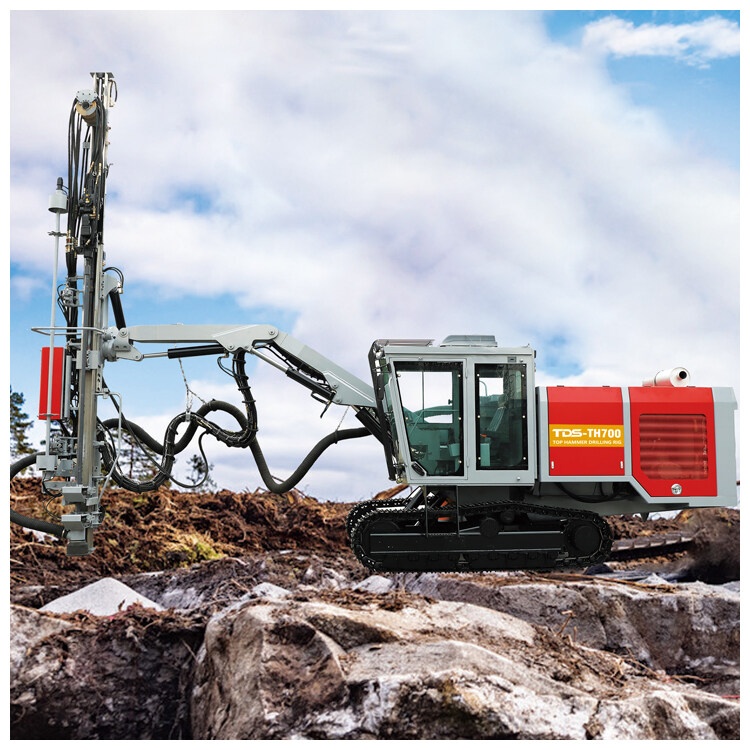
Effective maintenance strategies can extend tool life and help to deliver cost effective Top Hammering.
Preventive Maintenance Strategies for Top Hammer Tools
Preventive maintenance includes routine lubrication schedules for shank adapters and couplings using specified greases designed for high-impact environments. Regular inspection intervals—every 250 operating hours or after approximately 1,000 meters drilled—help detect early signs of galling or thread deformation before failure occurs.
Monitoring Wear Patterns for Predictive Maintenance
New vibration monitoring tools are now able to pick up early signs of rod bending or bit imbalance allowing for repair before serious damage occurs. In a case study a Scandinavian quarry used predictive monitoring tools to reduce unscheduled down time by 15%. The result for this company has been significant, with thousands of dollars saved each year in increased usage.
Where Does TDS Fit Into the Global Top Hammer Market?
The Drill Store (TDS) is a well-established and reputable supplier of Top Hammer Drilling Rigs and drilling tools and accessories for contractors across Asia-Pacific and North America. At TDS we have many years of field experience and work closely with engineering departments to supply the correct equipment for the various geological conditions. Technical advice is provided after a site survey and the equipment is specified to meet the customers production needs. In addition to supplying the best drilling equipment on the market, we also maintain a vast spare parts inventory with regional hubs located near the major mining centers. Our spare parts delivery is designed to get the minimum amount of downtime for our customers. On top of that we provide on-site training for our customers to correctly and safely and efficiently use our Top Hammer drilling tools to achieve maximum return on investment.
Conclusion
Top hammer drilling technology is constantly evolving thanks to better quality steel, improved hydraulic management and greater automation, which enhance the drilling precision while maintaining a reasonable cost. The trend to Top Hammer drilling is confirmed by the market studies and it is currently used in all regions of the world for a wide variety of projects. Companies wishing to develop their productivity in the long term, must work with the best tools, which are maintained on a regular basis with the help of qualified service providers such as TDS. In a highly competitive market where the prices of raw materials are increasingly volatile, the life span of the tools is no longer just a technical aspect but also a costly one and companies must do their best to extend it as much as possible in order to be successful in the long term.
FAQs
1. What is the ideal rock hardness range for top hammer drilling?
The Top Hammer system is designed for medium-hard to hard rock formations with rock hardness of 100–250 MPa UCS. In such formations, the Top Hammer drilling method is effective in transferring percussive energy to the drill bit without excessive wear on tools.
2. How often should you replace your drill rods?
The usage intensity is the deciding factor here. Typically after 12 to 15 regrinds or when the wear on the threads exceeds the tolerance allowed by the manufacturer.
3. How effective are top hammer rigs at greater depth?
Top hammer rigs are very efficient until approximately 30–40 meters per hole, after that, the energy losses are too great compared with DTH systems.
4. What are common signs of poor energy transfer in a top hammer setup?
Reduced penetration rate, irregular hole deviation, excessive vibration at joints, or visible thread damage often indicate inefficient energy transmission.
5. Proper bit selection can have significant impact on the overall drilling economics?
Using the correct bits for the corresponding rock formations can increase bit life by up to 25% resulting in lower cost per meter as less bit’s are required to be replaced, resulting in less downtime.
 Dutch
Dutch  English
  Portuguese
  Spanish
  Russian
  Italian
  German
  French
  Arabic